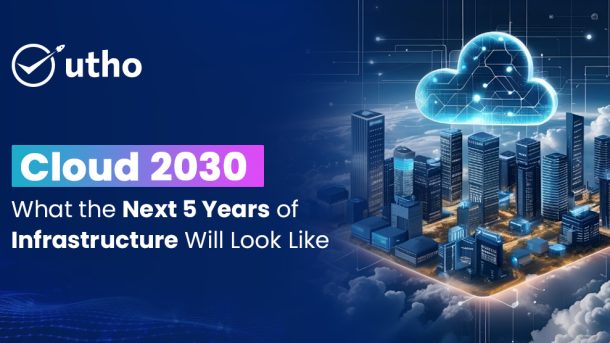
Cloud technology has already changed how businesses work. It helps companies run faster, grow easily and build new products quickly. In the last few years many companies moved to the cloud, used SaaS tools and adopted cloud native systems.
But now a new big change is coming.
By 2030 the cloud will become much smarter, more automatic and more connected than what we see today. New technologies like AI edge computing, quantum computing and decentralized systems will completely change how the cloud works for every business.
To plan for the future IT teams developers and business leaders must understand these changes so they can build a strong and future ready tech strategy.
Artificial Intelligence as the Brain of the Cloud
AI will drive the next generation of cloud systems. It will help the cloud manage itself with less human effort. AI will make operations smoother by predicting problems early and adjusting resources automatically.
AI based cloud management will balance server workloads on its own, predict failures before they happen and scale resources up or down in real time based on how much traffic is coming in. This will save money because AI will place workloads in the most efficient way across regions and cloud providers.
AI will also change cloud security. It will use machine learning to spot unusual behavior, stop attacks and keep updating threat detection all the time. Cloud platforms will no longer just run services, they will become smart systems that can watch themselves fix issues and stay secure on their own.
The Rise of Multi-Cloud and Hybrid Ecosystems
Organizations are now using many cloud providers instead of depending on just one. This helps them avoid vendor lock-in, get better reliability and make their services available worldwide. By 2030 hybrid clouds will become the most common model. It will mix public cloud private cloud and edge resources.
Multi cloud tools will make it easy to move workloads from one provider to another while keeping everything secure, compliant and cost efficient. With hybrid cloud companies can keep sensitive data on their own systems and use public cloud power for other workloads. This gives them both flexibility and strong security and makes their cloud setup stronger and ready for the future.
Edge Computing: Bringing the Cloud Closer to Users
As more devices get connected processing data close to where it is created becomes very important. Edge computing reduces delay, saves bandwidth and supports real time actions. By 2030 cloud services will run directly on edge locations so AI models and analytics can work near the data source. This will help industries like healthcare, self-driving cars, smart cities and manufacturing.
Edge computing will bring faster responses, better user experience and smarter use of the network while still keeping everything safe across many locations.
Serverless and Event-Driven Computing: The Next Evolution
Serverless will become one of the most popular ways to build apps in the next few years. With serverless developers don’t need to manage servers or infrastructure. They can focus only on writing features and the cloud automatically handles scaling provisioning and monitoring.
Event driven systems will work together with serverless. These systems react instantly to things like user actions, sensor data or system events. This will help companies deploy faster, reduce costs and work more flexibly.
Because serverless charges only for the exact time your code runs it also makes cloud spending cheaper and more efficient.
Security in 2030: Zero Trust and AI-Driven Protection
Security will stay a major focus as cloud systems become more complex. Zero trust will become the normal way to protect cloud environments. This means every user device and request must be checked again and again before getting access.
AI will help catch threats quickly by spotting risks strange behavior or weak points in real time. Cloud systems will also follow local data laws automatically making sure data is stored and processed in the right regions.
Decentralized identity systems like blockchain will help create strong and tamper proof login and access control so only the right people get in.
Sustainable Cloud: The Green Infrastructure Revolution
Sustainability will become a key part of cloud infrastructure by 2030. Data centers will use less power by improving their design using clean energy and using smarter cooling systems.
Cloud companies will run AI and heavy computing tasks in a way that uses less electricity and produces fewer carbon emissions. Businesses that choose a green cloud will not only help the environment but also gain an advantage because customers and governments are giving more value to eco-friendly practices.
Quantum Computing Integration in Cloud Services
Quantum computing will slowly become a part of normal cloud systems. By 2030 companies will use Quantum as a Service which means they can use quantum computers through the cloud without buying them.
Both normal computers and quantum computers will work together. This will help in areas like AI, new materials security and complex scientific calculations. Cloud platforms will handle these mixed workloads smoothly so businesses can use quantum power for special tasks while keeping their regular work on normal cloud systems.
Cloud-Native Applications and Microservices Architecture
Cloud-native development will help companies move faster and scale easily. With microservices apps are split into small parts that can be updated and deployed on their own.
Containers with systems like Kubernetes will keep these microservices easy to move scale and keep running smoothly. CI/CD pipelines will be fully automated and AI will help in testing, watching the system and deploying updates. This will reduce downtime, make apps more reliable and speed up innovation.
Real-Time Observability and Predictive Analytics
By 2030 cloud platforms will give very clear visibility and smart predictions. Companies will be able to check app performance latency and resource usage in real time.
- Predictive tools will help the cloud guess traffic spikes failures and scaling needs before they happen.
- These cloud insights will also connect with business intelligence tools so teams can make better decisions at every level.
- This level of visibility will lower risks, use resources better and improve overall system performance.
Next-Generation Cloud Storage Solutions
- The fast growth of data needs new and smarter storage solutions. By 2030 AI will handle storage automatically. It will move data between hot warm and cold storage based on how often it is used.
- Object storage will become the main way to store unstructured data like images, videos, IoT data and analytics files. It will make handling large data sets easy and smooth.
- Blockchain based storage will keep data safe and unchangeable. It will make cloud storage more reliable, secure and tamper proof.
Global Connectivity and Ultra-Low Latency Networks
Fast and stable internet is very important for cloud systems. With 5G and the upcoming 6G networks, devices, remote teams, and edge systems will be able to connect to the cloud with almost zero delay.
SD-WAN and AI-based network tools will help make networks more flexible, secure, and fast. Global CDNs will use smart routing so that content reaches users quickly and smoothly, no matter where they are in the world.
The Human Element Skills and Culture in the Cloud Era (Commas Removed)
Even though cloud systems are getting smarter human skills are still very important
There will be a higher need for cloud engineers, cloud architects, DevOps experts and cloud security professionals.
People will have to keep learning new skills especially in AI based operations managing multiple clouds and running hybrid setups.
Companies will also need proper rules and processes to control cloud costs, follow compliance and track performance.
A cloud first mindset will grow where teams focus on collaboration innovation and decisions based on data.
Economic Implications of the Cloud Revolution (Commas Removed)
Cloud technology will change how companies plan their IT budgets.
Pay as you go pricing will help organizations save money and scale up or down easily.
AI based pricing models may adjust the cost depending on usage demand and available resources.
Since companies will not need to buy expensive hardware they can move from on premise systems to cloud native solutions that are more scalable, flexible and efficient.
Conclusion Preparing for Cloud 2030 (Commas Removed)
By 2030 the cloud will become smarter, faster and more connected than ever.
AI edge computing multi cloud quantum tech and green data centers will change how businesses build and secure their digital systems.
Companies that upgrade early by moving workloads to the cloud adopting cloud native tools and building future skills will have more speed, reliability and efficiency.
The next phase of cloud computing will benefit businesses that stay flexible, use zero trust security, monitor their systems closely and rely on automation.
As companies move from old systems to smart cloud platforms, cloud first businesses will grow much faster than those who delay.
To stay competitive organizations must choose cloud providers who offer strong performance, clear pricing and scalable infrastructure.
This is where modern India focused platforms like Utho become important offering powerful cloud systems predictable pricing and support built for the needs of Cloud 2030 and beyond.