

Today’s digital world runs on very large and complex systems like servers, cloud platforms, databases, storage systems and global networks.
Every app you use every day like YouTube, Google Instagram or online banking works because a strong system is running behind it all the time to keep everything smooth and working properly.
But this raises an important question:
How do companies manage such large and complex systems efficiently?
In the earlier days of computing, engineers had to set up infrastructure manually. They would:
- Configure servers one by one
- Click through multiple dashboards
- Remember system settings manually
- Repeat the same steps again and again
This manual process was:
- Slow
- Time-consuming
- Error-prone
- Difficult to scale
Even a small mistake can cause system failure or downtime.
To fix this problem a modern method was created called Infrastructure as Code (IaC).
When we talk about iac infrastructure as code it simply means building and managing IT systems using code instead of doing everything manually.
Just like developers write code to build apps they also write code to create servers, networks databases and cloud systems.
In simple words infrastructure as code iac works like a digital guide that tells the system what to create and how to set it up step by step.
Because everything is automated, devops infrastructure as code iac has become very popular in modern software development. It makes systems faster, more consistent and much easier to manage.
Why Security Matters in IaC
One of the most important aspects of modern cloud systems is infrastructure as code iac security. Since everything is defined through code, even small mistakes can expose systems to risks if security is not properly managed.
That is why companies focus heavily on infrastructure as code iac security to ensure that servers, networks, and cloud resources are safe, consistent, and protected from misconfigurations.
Understanding Infrastructure as Code
To truly understand iac infrastructure as code, let us use a simple real-life example.
Imagine Building a House
Suppose you want to build a house.
There are two ways to do it:
1. Without a Plan
If workers start building without a proper plan:
- Every room may look different
- Walls may not match
- Measurements may be incorrect
- Mistakes will happen often
The result is confusion and inconsistency.
2. With a Blueprint
Now imagine you have a proper blueprint.
The blueprint clearly shows:
- Room sizes
- Wall structure
- Door and window positions
- Electrical layout
Every worker follows the same plan, so the house is built exactly as expected.
How IaC Works the Same Way
In infrastructure as code iac, engineers create a similar “blueprint,” but in the form of code.
This code defines:
- Servers
- Networks
- Storage systems
- Databases
- Security settings
Instead of manually setting everything up, the system reads the code and automatically builds the infrastructure.
This is why companies prefer iac infrastructure as code:
- It removes confusion
- It reduces human errors
- It ensures consistency
- It speeds up deployment
- It improves control over systems
Why Infrastructure as Code Is So Important Today
Modern applications need:
- Fast deployment
- High reliability
- Easy scaling
- Strong security
- Minimal downtime
Manual infrastructure setup cannot handle these demands efficiently.
That is why infrastructure as code iac has become a core part of modern DevOps infrastructure as code iac workflows.
Companies now rely on IaC to:
- Deploy applications faster
- Rebuild systems quickly if something fails
- Maintain the same setup for development testing and production
- Automate repetitive tasks
In today’s cloud driven world IaC is not just a helpful tool it has become a necessity for modern software engineering.
Why Infrastructure as Code is Needed
Modern companies need fast, reliable and scalable systems. Manual setup of infrastructure is slow and often causes human mistakes like wrong settings or missing security steps. It also becomes very hard to manage when traffic increases suddenly.
That is why iac infrastructure as code tools are used. They help engineers build complete systems using code instead of doing everything by hand. This makes the process faster, more consistent and less likely to have errors.
In simple words infrastructure as code iac helps companies create and manage servers networks and databases automatically using code which saves time and improves reliability.
One of the most important reasons companies adopt this approach is infrastructure as code iac security, because automation reduces human errors that can lead to security risks.
How Infrastructure as Code Works
Infrastructure as Code works by writing code that describes what the system should look like. This code includes things like server storage and network settings.
Then iac infrastructure as code tools read this code and automatically build the full system.
If something breaks the same code can be run again to rebuild everything quickly. This makes the system easy to manage, repeat and fix.
In simple terms devops infrastructure as code iac changes manual setup into an automatic process.
A major advantage of this approach is infrastructure as code iac security, because it ensures consistent configurations and reduces misconfigurations that can expose systems to risks.
Real Life Example of IaC
Imagine a company launching an online app. It needs servers, databases and storage. Without IaC engineers would set everything manually which takes a lot of time.
With iac infrastructure as code, everything is written in a single file. This file acts like a simple instruction guide that tells the system what to build and how to build it.
When this file is run the whole system is created automatically in a few minutes instead of hours or days. That’s why big companies like Netflix and Amazon use devops infrastructure as code iac for faster and safer deployments.
A key reason for this reliability is infrastructure as code iac security, because automated deployments reduce human errors and improve system safety.
Types of Infrastructure as Code
There are two main types:
Declarative approach: You only tell the system what you want and it automatically builds everything for you.
Imperative approach: You give step by step instructions on how to build the system.
Most modern iac infrastructure as code tools use the declarative approach because it is much simpler and easier to manage.
Benefits of Using Infrastructure as Code
One of the biggest advantages of iac infrastructure as code is speed. Tasks that earlier took hours or days can now be completed in just a few minutes because everything is automated using code.
Another major benefit is consistency. When infrastructure is created using code every environment like development testing and production stays the same. This reduces errors and makes systems more stable and predictable.
It also improves teamwork. Developers and operations teams can work together on the same code which is an important part of devops infrastructure as code iac practices.
Cost saving is another big advantage. Companies save time and money because they do not need large teams to manually set up servers and systems.
Most importantly automation reduces human mistakes. Since the system follows written code exactly the chances of errors become very low.
A major improvement in modern systems is infrastructure as code iac security, because consistent automation helps prevent misconfigurations and strengthens overall system protection.
Introduction to IaC Tools
To use Infrastructure as Code companies use special tools that help them create, manage and update infrastructure using code in an easy and automated way.
Some of the most popular iac infrastructure as code tools include:
- Terraform
- Ansible
- Kubernetes
- AWS CloudFormation
- Puppet
- Chef
Each tool has its own role. Some tools are used to create infrastructure, while others are used to configure and manage existing systems.
For example:
- Terraform is widely used for building cloud infrastructure.
- Ansible is used for configuration management after systems are created.
These tools form the foundation of modern infrastructure as code iac systems.
Why IaC is Important in DevOps
In DevOps speed automation and reliability are very important. Teams need to release software quickly without breaking existing systems.
This is where devops infrastructure as code iac becomes very useful.
With IaC developers can quickly create environments that match real production systems. This helps find bugs early and improves software quality.
It also makes work faster because teams do not have to wait for manual setup of infrastructure. Everything can be created and tested automatically.
Best Practices of Infrastructure as Code
When companies use iac infrastructure as code they follow some important rules to keep systems clean, safe and easy to manage.
One important practice is keeping code simple and organized. Clean code is easier to understand and maintain.
Another practice is reusing code. Instead of writing the same things again and again engineers reuse existing modules to save time and reduce mistakes.
Version control is also very important. In devops infrastructure as code iac teams use tools like Git to track changes and go back to older versions if needed.
Testing is another important step. Before applying changes to real systems engineers test everything in safe environments to avoid errors.
These practices make infrastructure as code iac more reliable and professional.
Infrastructure as Code Security
Security is very important in modern systems. When automation is used, protecting sensitive data becomes even more important.
This is where iac infrastructure as code security plays a key role.
In IaC systems sensitive information like passwords API keys and access tokens may be used. If not handled properly this data can be exposed to attackers.
That is why companies use secure tools like secret managers instead of writing sensitive data directly in code.
Access control is also important. Only trusted people should be allowed to change infrastructure code to reduce risks.
Many iac infrastructure as code tools also provide security checks to find problems before deployment.
By following these rules companies keep their systems safe, stable and secure.
Common Mistakes in IaC
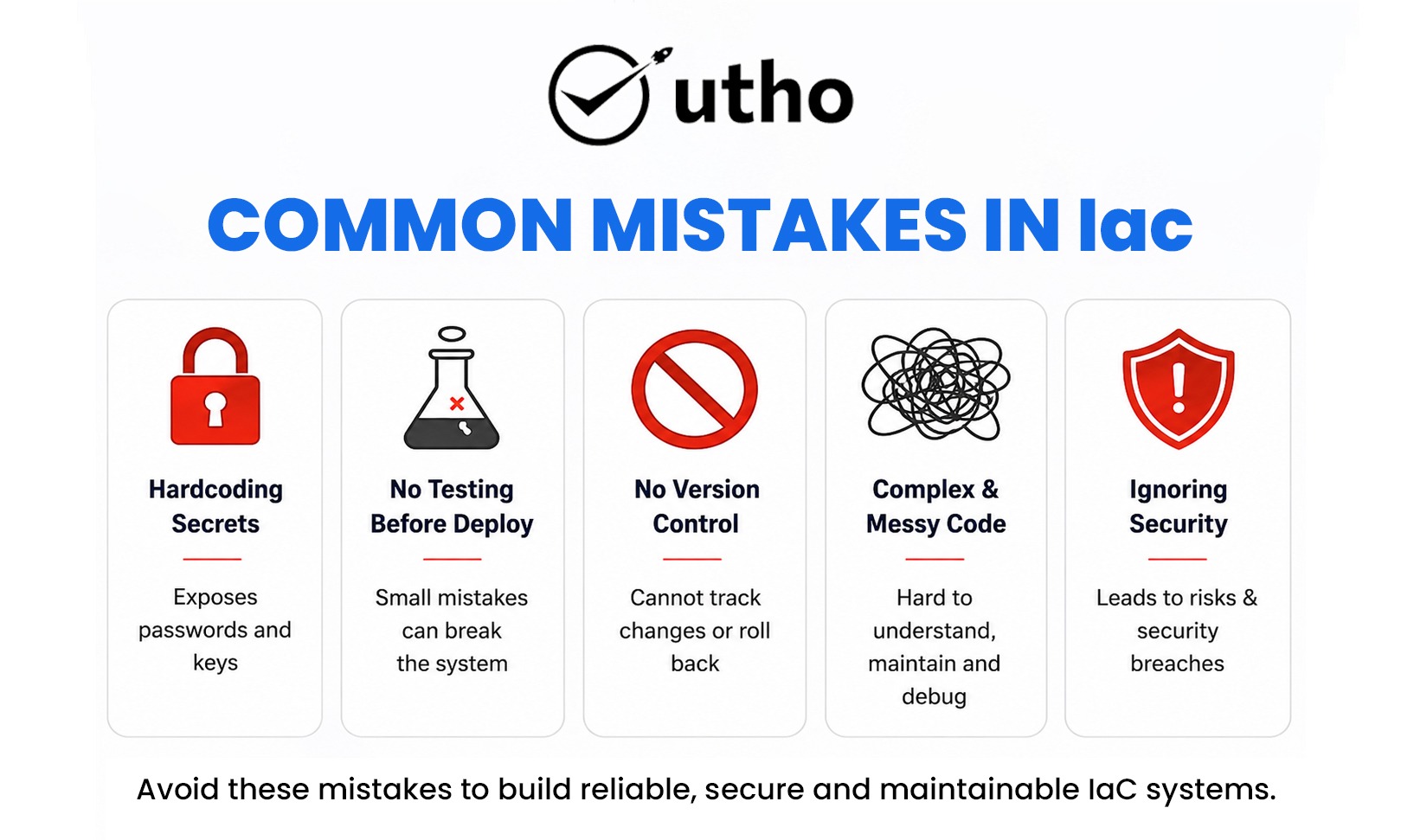
Even though iac infrastructure as code is very powerful beginners and even teams often make mistakes while using it.
One common mistake is writing very complex and messy code. When code is not organized it becomes hard to understand and fix later.
Another big mistake is ignoring security. Writing passwords or keys directly in code can lead to data leaks and serious risks. Poor handling also directly affects infrastructure as code iac security, making systems more vulnerable.
Some teams also skip testing before deployment. This is dangerous because even a small mistake can break the whole system or cause downtime.
Not using version control is another major mistake. Without tools like Git teams cannot track changes or go back to a working version when something goes wrong.
Real-World Use of IaC
Today almost every major tech company uses iac infrastructure as code tools to manage their systems at a very large scale.
For example:
- Streaming platforms use IaC to handle thousands of servers so videos play smoothly without stopping.
- E-commerce websites use IaC to manage sudden traffic during big sale events.
- Social media platforms use IaC to support billions of users around the world without slowing down.
When traffic suddenly increases IaC helps systems grow automatically by creating new servers without any manual work.
This is why companies like Netflix, Amazon and Google depend heavily on infrastructure as code iac to keep their systems fast, stable and reliable.
Even small startups now use IaC because cloud platforms make it easy to set up and manage systems from the beginning.
Step by Step Idea of Implementing IaC
Implementing Infrastructure as Code is a simple step by step process.
First engineers decide what kind of system is needed like servers, databases storage and networking.
Next they write code using iac infrastructure as code tools like Terraform or Ansible. This code clearly describes the whole system.
After that the code is tested in a safe environment to make sure everything works correctly and there are no errors.
Once testing is successful the same code is used on real systems. The tool reads the code and automatically builds everything.
If any problem happens later engineers can just update the code and run it again. This makes infrastructure as code iac flexible, fast and easy to manage.
DevOps and IaC Connection
DevOps is a modern way of working where development and operations teams work together instead of working separately.
Before DevOps developers wrote code and operations teams handled servers which often caused delays and confusion.
With devops infrastructure as code iac both teams now use the same code based system to manage infrastructure. This improves teamwork and reduces manual work.
Developers can release applications faster and operations teams can manage systems more easily.
A major advantage of this approach is also improved infrastructure as code iac security, because standardized automation reduces human errors and keeps infrastructure safer.
This strong teamwork is one big reason why IaC has become an important part of modern DevOps practices.
Popular IaC Tools in Detail
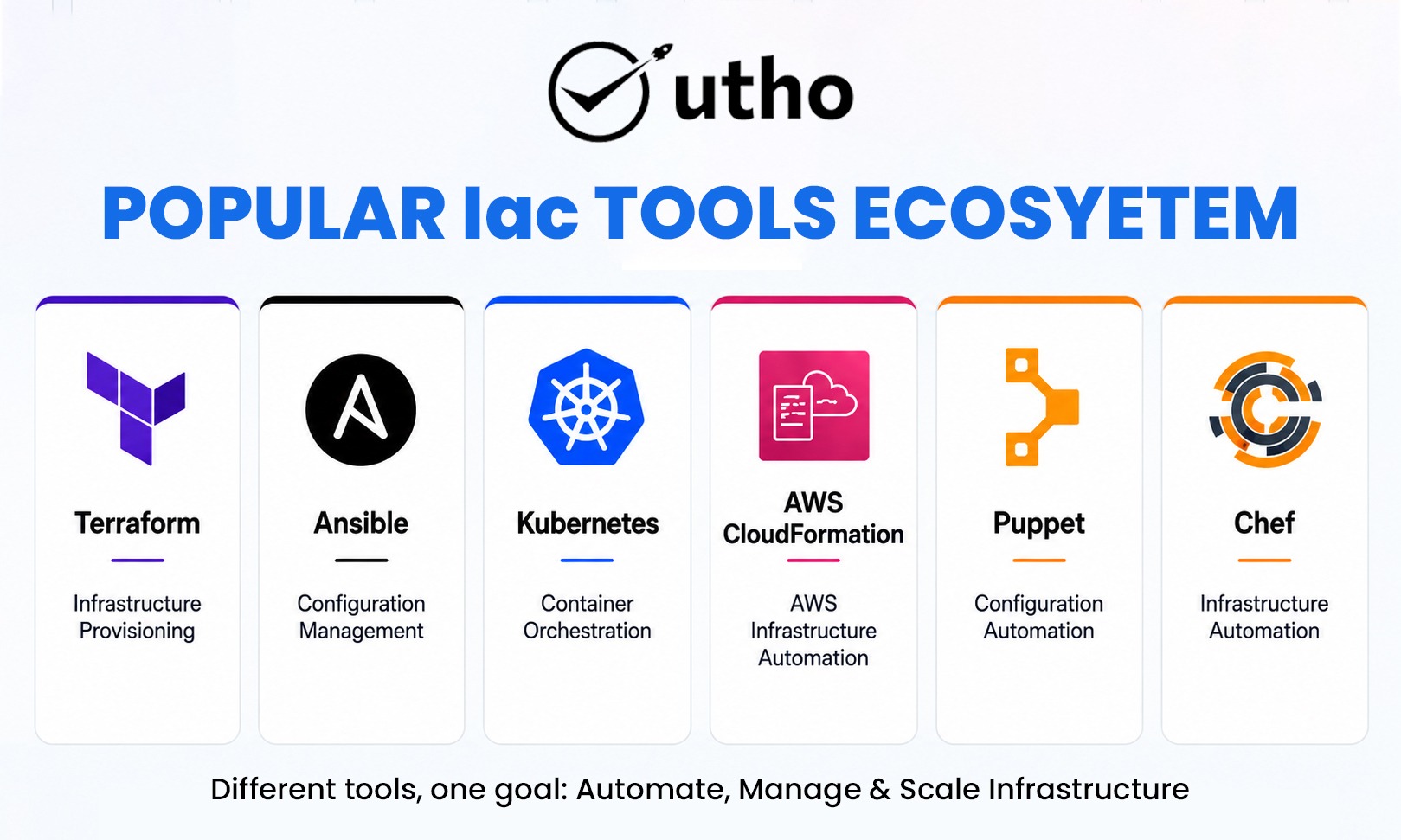
We already talked about some tools earlier but let’s understand them more clearly.
- Terraform is one of the most popular tools used to create infrastructure using simple configuration files. It works with many cloud platforms so it is very flexible.
- Ansible is used for automation and system management. It helps install software, manage servers and update systems easily.
- Kubernetes is used for managing container based applications and helps apps run smoothly even when traffic is very high.
Future of Infrastructure as Code
The future of infrastructure as code iac is very promising.
As systems become more complex, companies will need even faster and smarter automation tools.
In the future, artificial intelligence may help generate infrastructure code automatically, reducing manual effort even further.
Security will also become stronger, making iac infrastructure as code security more advanced and reliable.
We may also see simpler tools that allow even beginners to manage full cloud systems without deep technical knowledge.
Overall, IaC is expected to become a basic and essential skill in every IT and DevOps role.
Why IaC is Important Today
In today’s digital world, speed and reliability are critical.
Websites must load instantly, apps must handle millions of users, and systems must stay online 24/7.
Without iac infrastructure as code, managing such large-scale systems would be extremely difficult and error-prone.
IaC helps companies automate infrastructure, reduce manual work, and improve scalability.
That is why devops infrastructure as code iac is now widely used in modern software development.
Building Practical Cloud & DevOps Skills with Utho for Modern Infrastructure
Understanding Infrastructure as Code (IaC) is not only about learning tools like Terraform, Ansible, or Kubernetes. The real value comes from understanding how these technologies work together in practical cloud environments.
As modern infrastructure becomes more automated, professionals are increasingly focusing on hands-on experience to understand cloud systems, deployment workflows, and infrastructure management more effectively. In this learning journey, cloud platforms like Utho can help create practical exposure to real infrastructure environments.
1. Practical Exposure to Real Cloud Infrastructure
Learning IaC concepts becomes more effective when professionals work in environments that simulate real infrastructure behavior.
With cloud environments like Utho, learners and teams can better understand:
- How cloud infrastructure is deployed and managed
- How automated provisioning works in practical scenarios
- How systems scale during traffic spikes
- How infrastructure consistency improves reliability
Why It Matters:
Practical exposure helps bridge the gap between theory and real-world implementation. Instead of only learning concepts, professionals gain a better understanding of how infrastructure behaves in production-like environments.
2. Understanding DevOps and Automation Workflows
Infrastructure as Code works closely with DevOps practices, where automation and faster deployments play an important role.
Working within cloud environments such as Utho helps improve understanding of:
- Infrastructure automation workflows
- CI/CD deployment practices
- Configuration management processes
- Monitoring and system optimization basics
Why It Matters:
Modern infrastructure teams rely heavily on automation. Understanding these workflows helps reduce manual effort, improve deployment consistency, and support better collaboration between teams.
3. Building Better Cloud Security Awareness
As organizations increasingly depend on cloud systems, understanding secure infrastructure practices becomes essential.
Practical cloud environments help professionals explore:
- Secure infrastructure configurations
- Access control and permissions management
- Security best practices in cloud systems
- Risk reduction through proper configuration management
Why It Matters:
Even small infrastructure misconfigurations can impact reliability and security. A practical understanding of cloud environments helps teams identify and avoid common mistakes more effectively.
4. Keeping Up with Evolving Cloud Technologies
Cloud infrastructure is constantly evolving with new automation methods, DevOps practices, and infrastructure management approaches.
Working in modern cloud environments like Utho can support ongoing learning in areas such as:
- Infrastructure automation trends
- DevOps workflows and deployment strategies
- Cloud-native technologies
- Infrastructure management best practices
Why It Matters:
Technology changes rapidly. Staying connected with practical cloud environments helps professionals remain better prepared for modern infrastructure requirements.
Final Perspective
In today’s cloud-driven ecosystem, learning Infrastructure as Code is becoming more than just a technical skill—it is becoming an important part of understanding how scalable, secure, and reliable systems are built.
Practical environments like Utho can support this learning by helping professionals explore cloud infrastructure, DevOps workflows, and automation practices in a more hands-on and real-world way.
As modern infrastructure continues to evolve, professionals who focus on practical cloud experience alongside theoretical knowledge are often better prepared to manage real technology systems effectively.