
Today we live in a world where almost everything is connected to the internet. People wake up and check their phones, send messages to friends, watch videos, order food, play games, study online and even shop from home. Big companies, schools, hospitals and banks also use online systems every day. Big companies, schools, hospitals and banks also use online systems every day. All these activities create something very important called data.
In simple words data means information. It can be your name, mobile number, photos, passwords, school records, medical history, bank details, shopping history or even the videos you like to watch online. Every click message and internet search creates some type of data.
Years ago people used notebooks, cupboards and office files to save important information. Schools kept student details in registers, banks stored records on paper and businesses used large cabinets to save customer information.
But today things have changed. Most information is now stored digitally because it is faster, easier and more organized. People and companies can quickly save, find and manage information using computers, phones and online systems.
This digital storage helps schools, hospitals, banks and businesses work faster, save time and keep information better organized.
However, this creates a very important question:
Who controls your data when it is stored online?
Imagine this situation for a moment. Suppose your photos, passwords or personal information are saved on a computer server in another country. Then an important question comes to mind. Which country will protect your data? Will your own country make the rules or will the country where the data is stored decide what happens?
This is where data sovereignty becomes important.
At first this word may sound difficult or confusing but it is actually much easier to understand than most people think. It is simply about who controls and protects your data when it is stored in different countries.
In this blog we will clearly understand what is data sovereignty learn the data sovereignty definition and see why it is very important in today’s digital world where people use the internet every day for many things.
Many people also compare data sovereignty vs data residency because they want to understand how countries make different rules for storing and protecting data.
Data Sovereignty Definition
Before understanding everything deeply, let us first understand the data sovereignty definition in the easiest way possible because it helps explain the entire topic clearly. Many beginners first search what is data sovereignty before learning technical details.
The simplest data sovereignty definition is this:
Data follows the laws of the country where it is stored.
This one simple sentence explains the basic meaning of data sovereignty.
But if this still sounds confusing, do not worry. Let us understand it with an easy real-life example. Understanding data sovereignty vs data residency also becomes easier when you first understand how countries control stored information.
A Simple Example to Understand Data Sovereignty
Imagine you visit your cousin’s house during summer vacation.
Even though you belong to your own family, you still follow the rules of your cousin’s house.
For example:
- Maybe everyone sleeps early there
- Maybe phones are not allowed during dinner
- Maybe shoes must be removed before entering the house
Why do you follow these rules?
Because you are inside their house.
The same thing happens with data.
If information is stored inside another country, then the laws of that country may also apply to the data.
This idea is the heart of the data sovereignty definition. This also helps people better understand what is data sovereignty in a simple way.
Real-Life Example of Data Sovereignty
Suppose a company in India stores customer records in Germany.
Even though the business belongs to India, German laws may still affect:
- How customer data is protected
- Who can access the information
- How data is shared
- What security rules must be followed
This happens because the information is physically stored in Germany.
That is why companies spend a lot of time understanding the data sovereignty definition before deciding where to store important business data.
Businesses want to make sure their information stays safe, follows the right country laws and remains protected from problems. This helps companies choose the best place to store important data and avoid future risks.
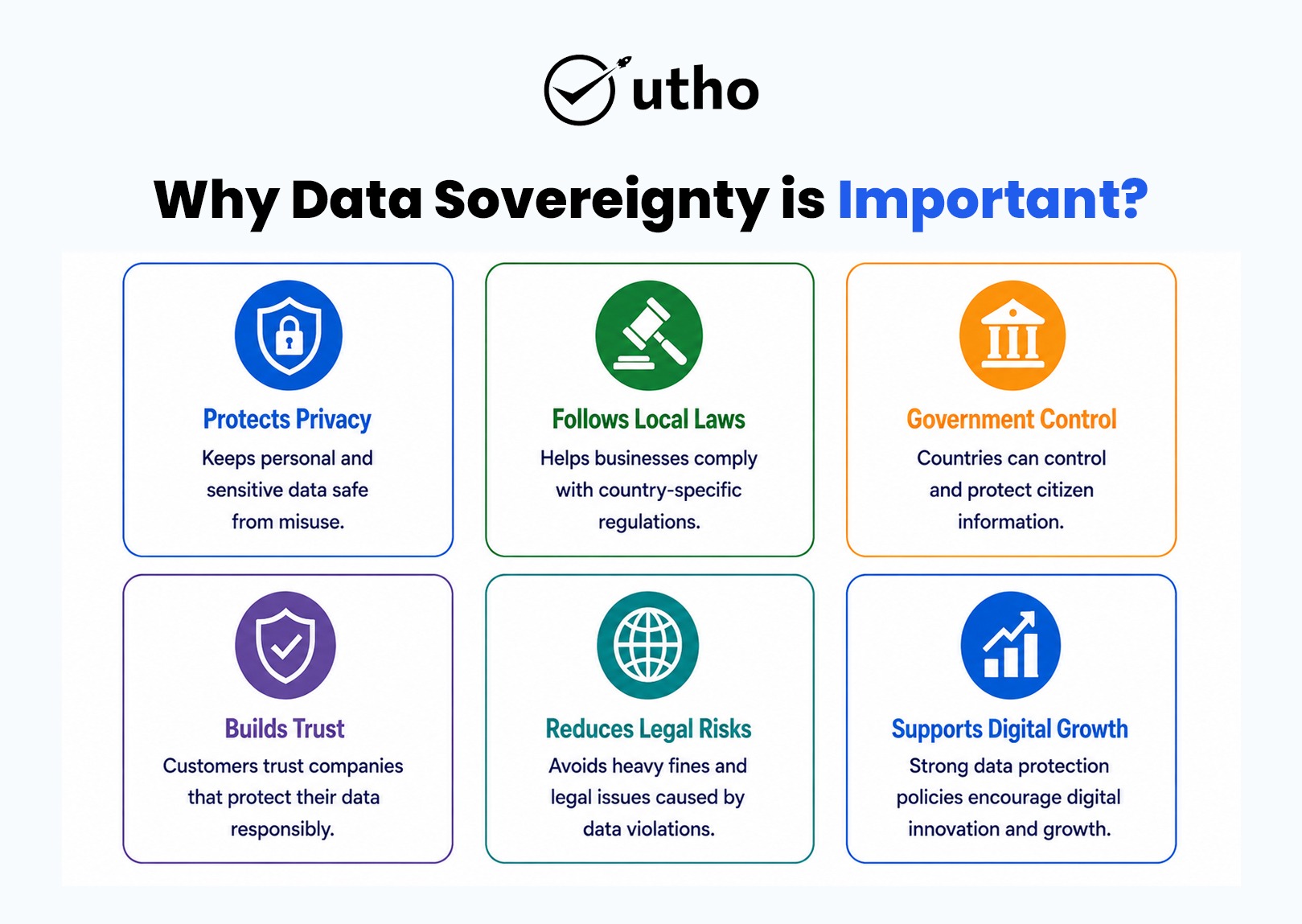
Why Is Data Sovereignty Becoming Important?
Today, governments around the world care deeply about digital privacy and online security.
Countries want to make sure that:
- Citizen information stays protected
- Personal data is not misused
- Companies follow privacy laws
- Sensitive records stay secure
Because of this, businesses must carefully understand the data sovereignty definition before storing information in cloud systems or international servers. Many businesses also compare data sovereignty vs data residency to understand where data should be stored safely.
Simple Rule to Remember
In very simple words, the data sovereignty definition teaches us one important thing:
The place where data lives matters.
Where data is stored can decide:
- Which laws apply
- Who controls the information
- How secure the data remains
That is why understanding data sovereignty has become extremely important in today’s digital world.
What Is Data Sovereignty?
Now let us deeply understand what is data sovereignty in very simple words.
Many people ask:
What is data sovereignty?
The easiest answer is:
It means a country has legal control over the data stored inside its borders.
Let us understand this slowly and simply.
Every Place Has Rules
Think about daily life.
- Schools have rules
- Homes have rules
- Roads have traffic rules
- Offices have workplace rules
In the same way, countries also have laws to protect people and businesses.
These rules may include:
- Privacy laws
- Banking regulations
- Internet safety rules
- Cybersecurity policies
- Digital protection laws
This is where the answer to what is data sovereignty becomes easier to understand.
What Is Data Sovereignty Really About?
In simple words, data sovereignty is mainly about who controls information.
If your business data is stored inside a country, then that country may have legal power over that information.
This is why businesses ask one very important question:
“Where exactly is our data stored?”
Because the location of data can decide:
- Which privacy laws apply
- Who can legally access the information
- How data should be protected
- What security rules companies must follow
Many companies also compare data sovereignty vs data residency to better understand how laws and storage locations work together.
Simple Example to Understand?
Imagine an Indian company stores customer information in Singapore.
Even though the company belongs to India, Singapore’s laws may also affect the data because the information is physically stored there.
For example, Singapore may have different rules for:
- Data protection
- Privacy rights
- Government access
- Security standards
This simple situation helps explain what is data sovereignty in a very practical way.
Why Does Data Sovereignty Matter Today?
Today, millions of websites and apps collect huge amounts of information every second.
For example:
- Social media apps store photos, videos, and messages
- Shopping websites save addresses and payment details
- Schools store student records online
- Hospitals save health reports digitally
- Banking apps protect financial information
All of this information becomes data.
Now imagine if nobody knew who controlled this information.
Things could quickly become unsafe and confusing.
Private information can be stolen, used in the wrong way or seen by people without permission.
This is one big reason why data sovereignty is important in today’s online world.
As cloud computing grows businesses governments and small companies must think carefully about where they keep their information so it stays safe and follows the right rules.
Understanding the data sovereignty definition also helps companies make better decisions about where to save important data.
Why Data Has Become So Valuable
To truly understand why data sovereignty matters, we first need to understand something very important:
Why has data become so valuable today?
Let us understand this in the simplest way possible.
Think About Your Phone
Imagine your mobile phone for a moment.
Your phone may contain:
- Family photos
- Important contacts
- Private messages
- Passwords
- Videos and memories
- Banking apps
- Social media accounts
Now imagine if someone suddenly stole your phone and got access to everything inside it.
That would feel scary, stressful, and unsafe.
Why?
Because your personal information is valuable.
Businesses Store Even More Valuable Information
Now think bigger.
Companies do not just store information about one person.
They often store information about thousands or even millions of customers.
For example:
Hospitals Store:
- Medical reports
- Health history
- Patient records
- Emergency contact details
Banks Store:
- Account information
- Transaction history
- Financial details
- Identity verification documents
Online Shopping Websites Store:
- Customer names
- Home addresses
- Payment history
- Buying habits
Schools and Universities Store:
- Student records
- Exam results
- Personal information
This means businesses are handling a huge amount of private and important information every single day.
Why Do Experts Call Data “The New Gold”?
Many experts today call data “the new gold.”
But why?
Because information helps businesses make smarter decisions.
For example, companies use data to:
- Understand customer behavior
- Improve products and services
- Offer better recommendations
- Increase business growth
- Make smarter decisions
For instance, shopping websites study what customers buy to recommend better products.
Streaming platforms suggest movies based on watching habits.
Food delivery apps recommend restaurants based on past orders.
All of this works because of data.
Valuable Things Always Need Protection
Now think about something important:
Anything valuable always needs protection.
People protect:
- Money in banks
- Gold in lockers
- Important papers in safe places
In the same way, valuable digital information also needs strong protection.
This is exactly where data sovereignty becomes important.
The data sovereignty definition helps businesses understand:
- Where important information should be stored
- Which country’s laws apply
- How data should be protected
- What privacy rules companies must follow
Many businesses also compare data sovereignty vs data residency to better understand how different countries make rules for storing data.
Without proper protection customer information can become unsafe, stolen or used in the wrong way.
That is why understanding what is data sovereignty has become very important in today’s digital world.
Why Countries Care About Data Sovereignty
Now let us understand another important question:
Why do governments care so much about data sovereignty?
The answer is simple:
Governments want to protect citizens.
Think about parents.
Just like parents try to protect children from danger, countries also want to protect the personal information of their people.
Today, digital data includes many highly sensitive details, such as:
- Names
- Phone numbers
- Medical reports
- Bank account details
- Identity information
- Home addresses
- Personal documents
This type of information is very private.
If it falls into the wrong hands, serious problems can happen.
What Can Happen If Data Is Not Protected?
If private information becomes unsafe, people may face:
- Online scams
- Identity theft
- Money loss
- Privacy violations
- Cybercrime risks
For example, imagine someone gets access to your banking information or personal identity details.
That could create major financial and personal problems.
This is one reason why governments take digital privacy very seriously today.
Why Some Countries Want Local Data Storage
Because of these risks, many governments now create stronger rules related to data sovereignty.
Some countries believe important information should stay inside national borders.
But why?
Because local storage gives governments:
- Better privacy control
- Stronger security
- Easier legal protection
- Faster action during cyber threats
Many governments believe that if important citizen information is stored in another country, they may lose some control over security and privacy.
This idea is strongly connected to the data sovereignty definition.
A Simple Example
Imagine a country stores citizen medical records in another nation.
If legal issues happen, things may become complicated because another country’s laws may also affect that data.
This can create confusion about:
- Who controls the information
- Which privacy laws apply
- Who can access the records
That is why governments carefully think about what is data sovereignty before allowing important information to be stored internationally.
Many experts also discuss data sovereignty vs data residency to explain how storing data locally or internationally affects laws and privacy.
Why Businesses Also Care
Because governments are making stricter privacy laws, companies now spend much more time learning:
What is data sovereignty?
Businesses must decide:
- Where to store customer information
- Which country has legal control
- How to follow privacy regulations
Understanding these rules helps companies protect customer trust and avoid legal problems.
This is why data sovereignty is becoming one of the most important topics in cloud computing, cybersecurity, and digital privacy today.
A Simple Example to Understand Data Sovereignty
Let us understand what is data sovereignty with an easy example.
Imagine Ravi keeps his school bag at his uncle’s house.
Now Ravi still owns the bag, but the house rules may decide where the bag stays and how it is protected.
Maybe:
The bag stays in one room.
Nobody touches it.
It must remain locked safely.
Even though the bag belongs to Ravi, the uncle’s house rules still matter.
Data works in the same way.
If information stays inside another country, then that country’s rules may help decide how the data is handled.
This example explains what is data sovereignty in the easiest possible way.
This is also why understanding the data sovereignty definition is important for businesses.
Why Businesses Are Learning About Data Sovereignty
Modern businesses store a huge amount of information online every single day.
Whether it is a small startup or a large company, businesses now depend heavily on digital systems to manage daily operations.
Companies often store:
- Customer records
- Employee details
- Payment information
- Passwords and login data
- Business documents
- Purchase history
- Contact information
Earlier, many businesses mainly focused on things like internet speed, storage size, and system performance.
But now companies have realized something very important:
The place where data is stored can change the rules around it.
This is one of the biggest reasons businesses are spending more time learning about data sovereignty. Many companies also compare data sovereignty vs data residency to better understand where information should be stored safely.
Why Does Data Location Matter?
Imagine a company stores customer information in another country without properly understanding local privacy laws.
Later, the business accidentally breaks those laws.
What could happen?
The company may face serious problems such as:
- Heavy financial fines
- Legal issues
- Customer trust problems
- Brand reputation damage
In some cases, businesses may even lose customers because people no longer trust them with private information.
This is why understanding what is data sovereignty has become extremely important for modern organizations. Experts also explain data sovereignty vs data residency when businesses choose cloud systems in different countries.
Simple Example to Understand
Imagine an online shopping company stores customer information in another country because storage is cheaper there.
But later, that country has strict privacy rules that the company did not follow.
Now the business may face legal trouble even though it never intended to break any law.
This example shows why businesses today must think carefully before choosing where data is stored. Understanding the definition of data protection rules also helps companies avoid legal problems.
Customers Care More About Privacy Today
Today, customers care more about online privacy than ever before.
People often ask important questions like:
“Is my personal information safe?”
“Who controls my data?”
“Where exactly is my information stored?”
“Can someone misuse my private details?”
These questions are becoming more common because people now understand that personal information is valuable.
The answers to these questions often connect directly with the definition of how countries protect digital information.
Businesses that clearly understand what is data sovereignty usually make smarter decisions about:
- Data protection
- Privacy compliance
- Security systems
- Cloud storage choices
This helps businesses build trust and protect customer information more effectively. Many organizations also study data sovereignty vs data residency to make better cloud storage decisions.
Why Data Sovereignty Is Growing So Fast
A few years ago, many businesses mainly cared about things like:
- Storage cost
- Faster internet speed
- Cheap cloud services
- Better performance
At that time, privacy was important, but it was not always the biggest concern.
Today, things have changed.
Why Has Data Sovereignty Become More Important?
Several major changes are happening in the digital world.
For example:
Privacy Has Become a Serious Topic
People now care much more about digital privacy.
Users want companies to protect their personal information carefully.
Nobody wants private details shared without permission.
Governments Are Creating Stronger Laws
Many countries are introducing stricter rules to protect citizens.
Governments now want companies to:
- Protect personal information
- Follow privacy laws carefully
- Store sensitive data responsibly
Because of this, businesses must think more carefully about where information is stored.
Cybersecurity Risks Are Growing
Cyberattacks, online scams, and data theft are becoming more common.
This makes companies more careful about protecting customer information.
Businesses now understand that weak protection can lead to:
- Financial losses
- Security problems
- Legal trouble
- Reputation damage
Companies Are Asking Smarter Questions
Earlier, businesses often asked:
“How much storage do we need?”
“How fast is the system?”
But today, companies ask much deeper questions like:
- “Where will our data stay?”
- “Which country’s laws will apply?”
- “Who legally controls this information?”
- “How do we protect customer privacy?”
All of these important questions connect directly.
Why This Topic Will Keep Growing
As cloud computing, Artificial Intelligence (AI), and online systems continue growing, businesses will store even more information digitally.
This means companies will need to think carefully about:
- Data location
- Privacy laws
- Government regulations
- Security systems
That is why data sovereignty is quickly becoming one of the biggest topics in technology, cybersecurity, and cloud computing.
In simple words, the data sovereignty definition is no longer only for IT experts.
Today, every modern business needs to understand it to stay safe, legal, and trusted in a digital world.
Conclusion
Today, data is everywhere.
Every message, photo, payment, and online activity creates information. Businesses, schools, hospitals, and governments all depend on digital systems to store important records.
But one important question always remains:
Who controls the data?
This is where data sovereignty becomes important.
In this blog, we learned the data sovereignty definition, which tells us that data follows the laws of the country where it is stored. We also deeply understood what is data sovereignty, which means countries may have legal control over information inside their borders.
As technology keeps growing, businesses and governments must think carefully about where information lives and who protects it.
Because in today’s digital world, protecting data is becoming just as important as creating it.