
Cloud security is no longer only an IT task it has become very important for every business. In 2026 companies depend heavily on cloud systems to run apps, store data and manage global operations. As usage increases the risk of attacks also increases so cloud systems become a main target for hackers.
Modern cloud security is not just firewalls or login control It is about protecting data identities apps and systems across many cloud platforms using smart tools like AI automation and zero trust security.
This guide explains cloud security in simple words why it is important and how companies protect cloud systems in 2026.
Introduction – Why Cloud Security Matters More Than Ever
Today most businesses run on cloud systems they use cloud for.
- Data storage and backup.
- Online business apps.
- AI and machine learning systems.
- Ecommerce and online services.
- Banking and payment systems.
- DevOps and CI CD pipelines.
Cloud computing has made things faster and easier but it has also created new security problems. In 2026 cyber attacks are more advanced and often use AI so they are faster and harder to stop.
Common threats include
- Data leaks of sensitive information.
- Wrong cloud settings exposing systems.
- Ransomware attacks on cloud servers.
- Stolen passwords and identity attacks.
- Third party security problems.
- AI based attacks that change in real time
Cloud security best practices are very important today. Every company needs cloud security best practices to stay safe. Without cloud security best practices systems can easily get hacked or face data loss. Modern companies build their entire security system using cloud security best practices to reduce risk and stay protected.
Why Cloud Security is Important
Cloud security is very important because companies store their most important data in the cloud. This includes customer data, financial records, business apps. AI models and internal information. If this data gets stolen or damaged it can badly affect business work and trust.
In 2026 cloud use is growing fast so security is even more important because attacks are also becoming more advanced and complex.
1. Rising Cyber Threats
Cyber attacks are now smarter and faster. Attackers do not use only simple methods, they also use AI tools and automation to find weak systems quickly.
Modern threats include
- AI based fake messages that look real.
- Automatic tools that search for weak systems.
- Deepfake videos or voices used for cheating.
- Large bot attacks that overload cloud systems.
These attacks can target many systems at the same time so strong cloud security is very important.
2. Shared Responsibility Model
Cloud security works on a shared responsibility model. Cloud providers protect the cloud system like servers and data centers. Customers must protect what they put in the cloud like.
- Data security and encryption.
- User access control.
- Security settings.
- Application safety.
Most security problems happen because of wrong settings or weak security from users not from cloud providers.
3. Multi Cloud Complexity
Today companies use more than one cloud like.
- Public cloud
- Private cloud
- Hybrid cloud
Related: Private vs Public Clouds: Know the Difference!
This gives more flexibility but also increases complexity.
- More clouds mean.
- More settings to manage.
- More access points to protect.
- More chances of mistakes.
- Bigger attack area.
So strong cloud security is very important in 2026
4. Remote and Distributed Work
Now employees work from anywhere using.
- Home internet
- Mobile devices
- Laptops on public Wi Fi
- Online collaboration tools
This improves work speed but also increases risk.
Every device or network can become a weak point if not secured properly and attackers can use it to enter cloud systems.
Types of Cloud Security Solutions
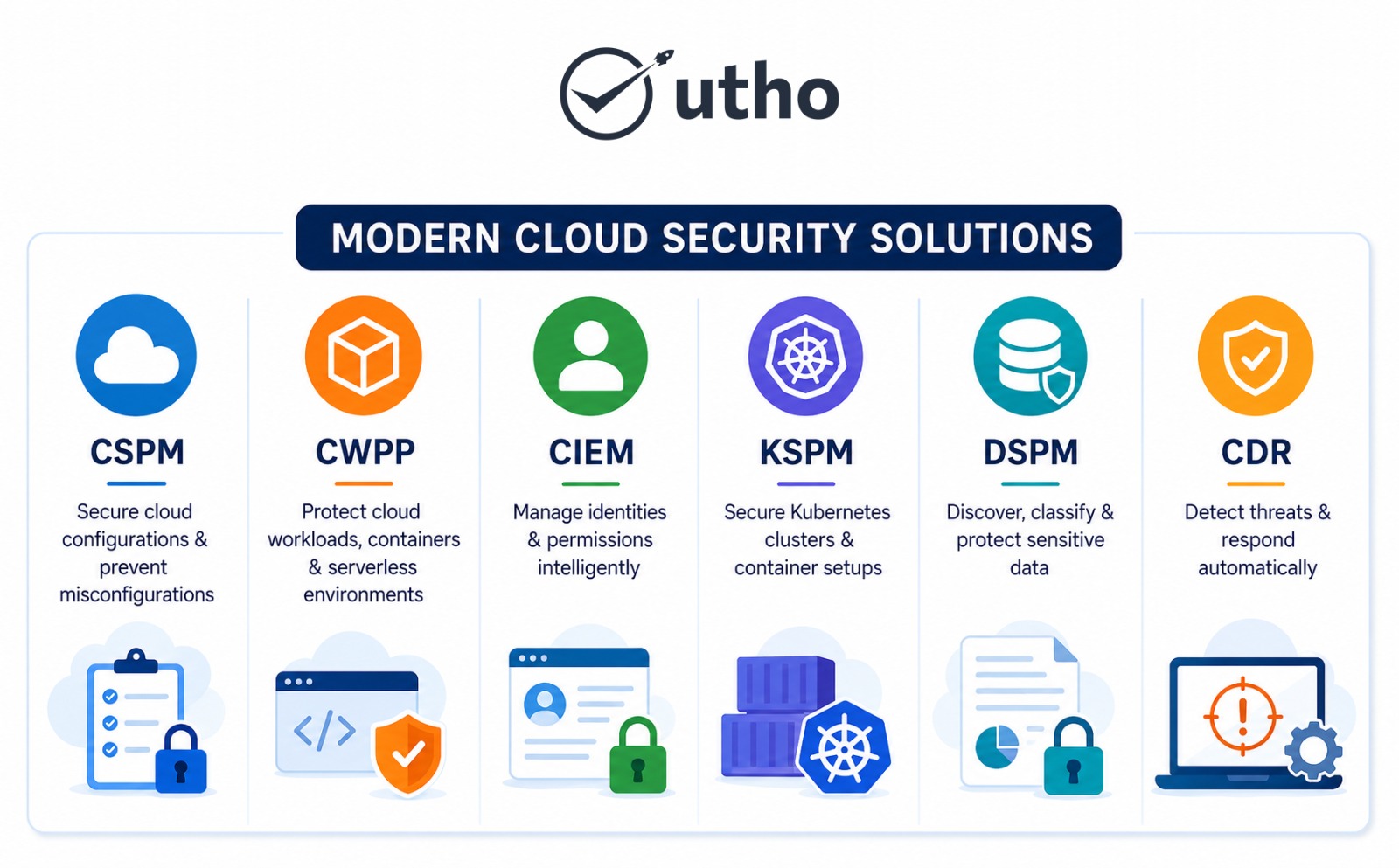
Cloud security best practices are now the base of all modern cloud security systems. Without cloud security best practices tools like CSPM CWPP and others cannot work safely. Organizations use cloud security best practices in every layer to keep systems secure and consistent In 2026 cloud security best practices also help AI systems take security decisions automatically. Advanced companies follow cloud security best practices to reduce risk at large scale.
1. CSPM (Cloud Security Posture Management)
CSPM tools help continuously check and improve cloud security settings.
They help to
- Find wrong or unsafe cloud settings.
- Follow security rules and compliance.
- Stop public or open storage mistakes.
- Fix security issues automatically.
In 2026 CSPM tools are smarter and can predict misconfigurations before they happen using AI.
2. CWPP (Cloud Workload Protection Platform)
CWPP protects workloads running in the cloud.
This includes
- Virtual machines.
- Containers.
- Serverless functions.
CWPP helps by
- Finding security problems in workloads.
- Detecting malware during runtime.
- Stopping active attacks.
In 2026 CWPP uses AI to study system behavior and detect unusual activity in real time.
3. CIEM (Cloud Infrastructure Entitlement Management)
CIEM manages user access and permissions in cloud systems.
It makes sure users only get the access they really need.
CIEM helps to
- Find unused or extra permissions.
- Reduce identity based attacks.
- Check risk in user access.
In 2026 CIEM tools work in real time and adjust access based on user behavior.
4. KSPM (Kubernetes Security Posture Management)
KSPM is used to secure Kubernetes systems.
It helps to
- Find wrong settings in clusters.
- Protect container systems.
- Maintain security rules.
In 2026 KSPM tools automatically scan and secure Kubernetes environments continuously.
5. DSPM (Data Security Posture Management)
DSPM focuses on protecting important data in the cloud.
It helps to
- Find sensitive data locations.
- Classify data type.
- Prevent data leaks.
In 2026 DSPM uses AI to quickly identify and protect sensitive data.
CDR tools detect and respond to threats in real time.
They help to
6. CDR (Cloud Detection and Response)
- Watch cloud systems continuously.
- Find unusual activity.
- Stop attacks automatically.
In 2026 CDR uses AI to understand attack patterns and respond faster than traditional tools.
Modern Cloud Security Best Practices
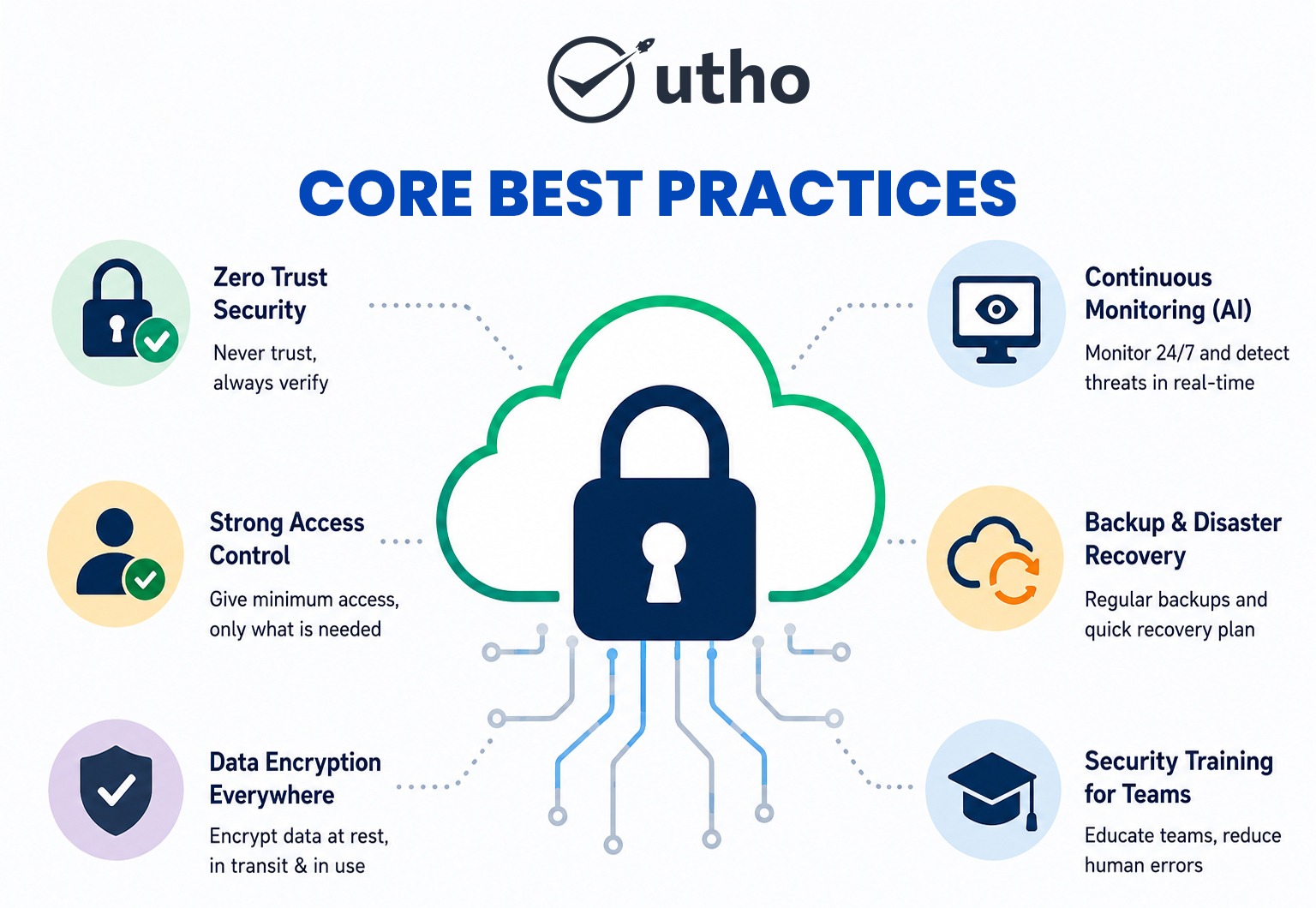
1. Zero Trust Security Model
Zero Trust is now the foundation of cloud security. The core idea is simple but powerful:
“Never trust, always verify”
In traditional systems, anything inside the network was often trusted by default. But in modern cloud environments, that assumption is dangerous.
Zero Trust ensures that every request is verified, regardless of where it comes from. This includes:
- Continuous identity verification
- Device authentication checks
- Session-level validation
- Real-time access evaluation
Even if an attacker gains internal access, they still cannot move freely without passing verification at every step.
2. Identity-Centric Security
In 2026, identity has effectively replaced the traditional network perimeter.
Instead of protecting “where” the system is, organizations now protect “who” is accessing it.
This includes securing:
- Users
- Applications and APIs
- Microservices
- Automated workloads and machines
Modern identity security uses:
- Multi-factor authentication (MFA)
- Passwordless authentication systems
- Biometric verification
- Risk-based login detection
Access decisions are now dynamic, meaning they can change based on user behavior, device health, and location.
3. Continuous Monitoring with AI
Cloud environments generate massive amounts of data every second. Manually monitoring this is no longer possible.
That’s where AI-driven monitoring comes in.
Modern systems use AI to:
- Detect unusual behavior patterns
- Identify early-stage cyberattacks
- Predict vulnerabilities before exploitation
- Reduce false security alerts
Instead of reacting after an attack, AI systems now focus on predicting and preventing threats in real time.
4. Strong Access Control (Least Privilege Principle)
The least privilege model ensures that every user, service, or application only gets the minimum access required to perform its function.
This significantly reduces risk because:
- Compromised accounts have limited access
- Insider threats are minimized
- Accidental data exposure is reduced
In modern cloud systems, permissions are also continuously evaluated and adjusted automatically based on usage patterns.
5. Data Encryption Everywhere
Encryption is now a default requirement across all cloud layers:
- Data at rest (stored data)
- Data in transit (moving between systems)
- Data in use means data that is being used or processed inside a system using confidential computing
Even if someone tries to steal the data it cannot be read without the correct encryption keys
In 2026 advanced encryption methods and hardware based security make cloud data protection much stronger than before
6. Automated Security in CI/CD Pipelines
Security is no longer separate from development – it is fully integrated into CI/CD pipelines.
Modern DevSecOps pipelines include:
- Automated vulnerability scanning
- Secret detection (API keys, tokens, credentials)
- Static and dynamic code analysis
- Policy enforcement before deployment
This ensures that security issues are detected early – before they reach production environments.
7. Continuous Security Auditing
Instead of periodic manual audits, organizations now rely on continuous auditing systems.
These systems perform:
- Real-time compliance checks
- Automated risk scoring
- Configuration validation
- Security posture tracking
This allows companies to maintain compliance at all times rather than only during audits.
8. Backup and Disaster Recovery
Cloud resilience depends heavily on strong recovery mechanisms.
Modern systems ensure:
- Multi-region data backups
- Automated failover systems
- Instant recovery pipelines
- Geo-redundant infrastructure
Even if a region or data center fails, services continue running with minimal disruption.
9. Security Training for Teams
Despite advanced automation, human error remains one of the biggest security risks.
That is why organizations invest in continuous training for teams on:
- Phishing awareness
- Secure coding practices
- Cloud misconfiguration risks
- Identity protection
Security is now considered a shared responsibility across all teams not just IT departments.
10. Multi-Cloud Security Strategy
Most enterprises now operate across multiple cloud providers such as AWS, Azure, and Google Cloud.
This creates complexity, so modern security systems focus on unified control:
- Centralized identity management
- Cross-cloud policy enforcement
- Unified monitoring dashboards
- Consistent compliance rules
This ensures security remains consistent even in distributed environments.
Core Principles of Cloud Security Architecture
1. Security by Design
Modern cloud systems are not secured after building Security is added from the start.
This includes
- Secure APIs with login and access control.
- Safe default settings to reduce mistakes.
- End to end encryption built into systems.
This helps reduce security problems during development and deployment.
2. Full Visibility
In 2026 visibility is very important for cloud security.
Modern systems provide.
- One dashboard for all cloud environments.
- Real time tracking of users systems and activity.
- Visibility across AWS Azure Google Cloud and hybrid systems.
This helps security teams quickly find threats and understand what is happening in the system.
3. Automation First Approach
Automation is now the main part of cloud security.
Modern systems automatically handle.
- Threat detection using AI.
- Security updates and fixes.
- Response to attacks.
This makes security faster and reduces need for manual work.
4. Network Security and Segmentation
Cloud networks are divided into small secure parts instead of one open system.
This helps to
- Stop attackers from moving inside the system.
- Control access between services.
- Keep sensitive data in separate secure areas.
Even if one part is attacked other parts stay safe
5. Compliance Automation
Compliance is now automatic not manual
Cloud systems follow rules like
- GDPR
- HIPAA
- PCI DSS
- ISO standards
Systems automatically check settings and fix or report problems so compliance stays active all the time
Benefits of Cloud Security
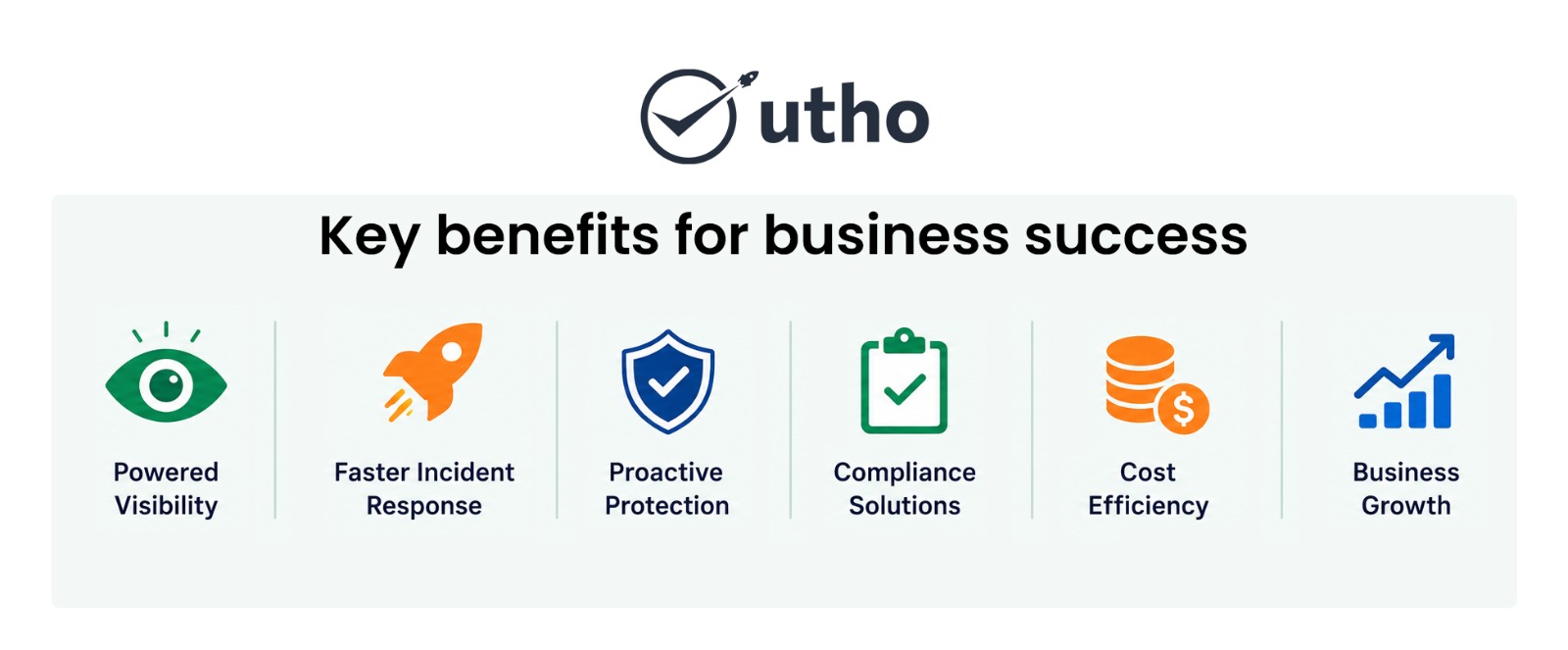
1. Enhanced Visibility
AI-powered security systems provide deep visibility into cloud environments by detecting:
- Suspicious activity patterns.
- System anomalies.
- Unauthorized access attempts in real time.
This allows organizations to respond faster and with better accuracy.
2. Faster Incident Response
Modern Cloud Detection and Response (CDR) systems can automatically react to threats within seconds.
They can:
- Isolate compromised systems
- Block malicious traffic
- Trigger automated remediation workflows
This minimizes damage and reduces downtime significantly.
3. Better Data Protection
With encryption applied across all stages – at rest, in transit, and in use data remains protected even in the event of a breach.
This ensures that sensitive business and customer information cannot be easily exploited.
4. Compliance Readiness
Automated compliance systems continuously validate cloud configurations against regulatory standards.
This eliminates the need for manual audits and reduces compliance-related risks and effort.
5. Cost Efficiency
Security automation reduces dependency on large manual security teams.
Organizations benefit from:
- Lower operational overhead
- Reduced incident management costs
- More efficient resource utilization
6. Business Continuity
Cloud security is closely tied to system resilience.
Even during cyberattacks or failures, modern security systems ensure:
- Service availability
- Automatic failover
- Rapid recovery mechanisms
This guarantees uninterrupted business operations in most scenarios.
Challenges in Cloud Security
1. Multi-Cloud Complexity
Most companies do not use only one cloud provider anymore They use multiple platforms like AWS Azure and Google Cloud at the same time.
This gives more flexibility and better reliability but it also creates some problems like.
- Different security models across providers.
- Difficulty in maintaining consistent policies.
- Increased chances of misconfigurations.
- Complex identity and access management.
Managing security across multiple environments significantly increases operational risk.
2. Misconfiguration Risks
Misconfiguration remains one of the leading causes of cloud breaches even in 2026.
Common issues include:
- Publicly exposed storage buckets
- Incorrect access permissions
- Weak identity policies
- Open network ports
Because cloud systems are highly configurable, even small errors can lead to major security incidents.
3. Serverless Security Challenges
Serverless computing introduces flexibility but also reduces visibility and control.
Challenges include:
- Limited runtime visibility
- Difficulty in tracking function-level activity
- Short-lived execution environments
- Complex dependency chains
Traditional security tools often struggle to monitor these dynamic workloads effectively.
4. Container Security Risks
Containers are widely used in modern cloud-native systems, but they introduce their own risks.
Key challenges include:
- Weak isolation between containers in some configurations
- Vulnerabilities in container images
- Supply chain risks from third-party images
- Runtime security monitoring difficulties
Without proper controls, containers can become entry points for attackers.
5. AI-Powered Cyberattacks
One of the biggest modern threats is the use of artificial intelligence by attackers.
Cybercriminals now use AI to:
- Bypass traditional security detection systems
- Automate phishing and social engineering attacks
- Identify system vulnerabilities faster
- Generate highly convincing fake identities or content
This has made cyberattacks faster, smarter, and harder to detect.
6. Supply Chain Attacks
Modern applications depend heavily on third-party libraries, APIs, and services.
This introduces risks such as:
- Compromised dependencies in software packages
- Vulnerable open-source components
- Hidden malicious code in updates
- Trust issues in external vendors
A single weak link in the supply chain can affect entire systems.
7. Remote Work Security Risks
With distributed teams now being the norm, employees access cloud systems from multiple locations and devices.
This increases risks like:
- Unsecured home or public networks
- Weak device security
- Phishing attacks targeting remote workers
- Unauthorized access from compromised endpoints
Securing endpoints has become as important as securing cloud infrastructure itself.
Future Trends of Cloud Security
1. Confidential Computing
Confidential computing introduces a new level of data protection.
It uses Trusted Execution Environments (TEEs) to ensure that:
- Data remains encrypted even during processing.
- Sensitive workloads are isolated from the host system.
- Cloud providers cannot access raw data during computation.
This significantly strengthens data privacy in cloud environments.
2. DevSecOps Integration
Security is now fully embedded into the development lifecycle.
Modern DevSecOps includes:
- Automated security testing in CI/CD pipelines
- Real-time vulnerability detection
- Secure coding enforcement
- Continuous compliance validation
This ensures that security issues are identified early in the development process.
3. AI-Driven Security Systems
Artificial intelligence is becoming a core defense mechanism.
AI-based security systems can:
- Predict potential attacks before they occur
- Automatically fix vulnerabilities
- Analyze behavioral patterns in real time
- Reduce false alerts through intelligent filtering
This shifts security from reactive to predictive.
4. Zero Trust Everywhere
Zero Trust is expanding across all layers of cloud infrastructure.
Every request is continuously verified based on:
- Identity
- Device health
- Behavior patterns
- Contextual risk analysis
Trust is never permanent – it must be continuously earned.
5. Autonomous Security Systems
Future cloud security systems will become fully self-operating.
They will be able to:
- Detect threats automatically
- Respond to attacks without human intervention
- Reconfigure security policies dynamically
- Recover systems after incidents
This leads to self-healing and self-protecting cloud environments.
6. LLM-Based Cloud Security Assistants
Large Language Models (LLMs) are now being used as security assistants.
They help by:
- Explaining vulnerabilities in simple language
- Detecting suspicious patterns in logs
- Suggesting fixes for security issues
- Assisting security teams with faster decision-making
This improves both speed and accessibility of security operations.
7. Edge Security Expansion
As computing moves closer to users through edge networks, security must also expand.
Edge security ensures:
- Faster threat detection at local nodes
- Reduced latency in security responses
- Protection of distributed workloads
- Consistent policies across edge and cloud
Conclusion
Cloud security in 2026 is no longer a static defense system – it is a dynamic, intelligent, and continuously evolving ecosystem.
It combines:
- AI-powered threat detection
- Zero Trust architecture
- DevSecOps integration
- Identity-centric protection
- Multi-layer defense strategies
The focus has shifted from simply preventing attacks to building systems that can predict, adapt, and recover automatically. Organizations that embrace these modern security practices are not only safer but also more resilient, scalable, and prepared for the future of digital infrastructure.