
A decade ago moving to the cloud was seen as one of the best technology decisions a business could make. Companies no longer had to spend large amounts of money on physical servers, data centers and hardware maintenance. Instead they could use computing resources whenever they needed them and pay only for what they actually used.
For Indian businesses this was a game changer. It gave startups, small businesses and growing companies access to modern technology without the need for heavy upfront investment in IT infrastructure.
Startups could launch products without spending lakhs on infrastructure. Growing companies could scale applications during peak demand. Enterprises could modernize legacy systems without building expensive data centers from scratch.
The promise was simple: greater flexibility, faster deployment and lower costs.
But for many organizations the reality has been a little different.
While cloud adoption has brought many benefits it has also created a new challenge which is rising and unpredictable cloud costs.
Today businesses across different industries are dealing with this issue. Whether it is a SaaS company serving thousands of customers, an e-commerce platform handling traffic spikes during peak seasons or a research organization managing large amounts of data cloud spending has become an important topic for business leaders.
Many organizations move to the cloud expecting to reduce their costs. However after some time many finance teams start noticing that cloud expenses are increasing much faster than they expected. In some cases cloud spending grows even faster than the business itself.
This does not mean that cloud computing has lost its value. It simply means that many organizations are not using their cloud resources in the most efficient way.
The good news is that many Indian businesses are now taking better control of their cloud spending. Instead of accepting rising cloud costs as something they cannot avoid they are adopting smarter infrastructure strategies that help reduce expenses while maintaining the same level of performance.
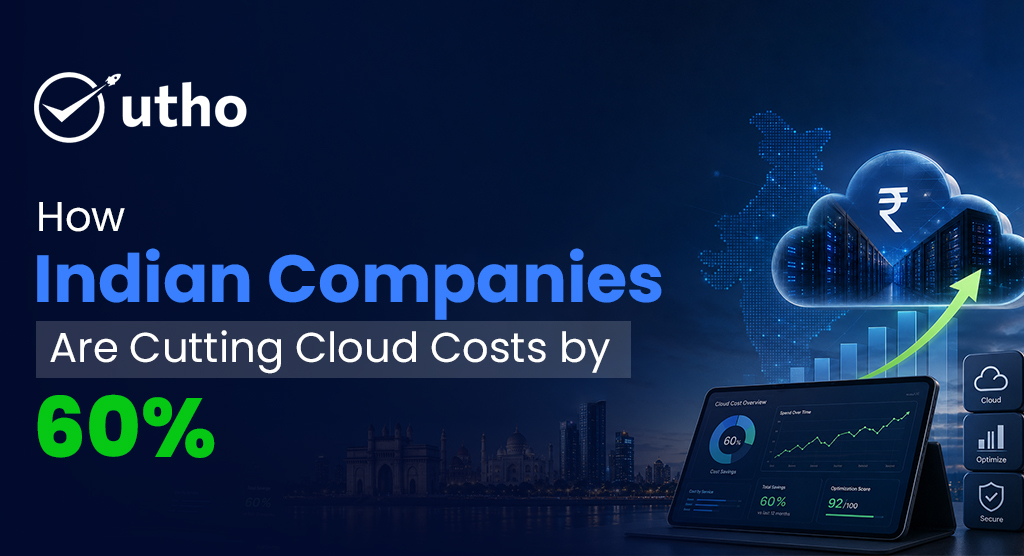
In fact many organizations have been able to reduce their cloud costs by up to 60% through better planning, improved visibility and more efficient use of resources.
Before understanding how these businesses are achieving such savings it is important to first understand why cloud costs increase in the first place.
Why Cloud Costs Often Get Out of Control
One of the biggest advantages of cloud infrastructure is how easy it is to deploy resources. Need a new server? It can be created in minutes. Need additional storage? A few clicks and it’s available instantly.
While this flexibility accelerates business growth, it can also lead to overspending when resources are not monitored properly.
The Overprovisioning Problem
Many organizations intentionally deploy more cloud resources than they actually need.
At first this may seem like a smart decision. No business wants its applications to slow down during periods of high traffic or important business operations.
Because of this IT teams often allocate extra CPU memory and storage to make sure there is enough capacity available when needed.
However the reality is that most applications do not run at their highest capacity all the time. For most of the day a large portion of these resources remains unused.
Even though the resources are not being fully utilized, businesses still have to pay for them. When this happens across multiple applications and workloads the extra costs can quickly add up.
Over time paying for underused resources becomes one of the biggest reasons behind rising cloud bills.
Unused Resources That Nobody Notices
One of the most common things found during cloud audits is the large number of resources that are still running even though they are no longer being used.
Development environments created months ago may still be active. Old virtual machines may continue running even after a project has been completed. Backup snapshots, unused storage volumes and temporary testing environments are often left behind and forgotten.
At first these resources may not seem expensive. The cost of each individual resource is usually small and easy to ignore.
However when many unused resources remain active across the cloud environment the total cost can become very large.
Over time businesses can end up paying thousands or even lakhs of rupees every month for infrastructure that is no longer being used.
Many organizations are surprised to find that a large part of their cloud bill comes from old resources that have been forgotten and are not being used by any application or workload.
Storage Costs Grow Quietly Over Time
When organizations calculate cloud expenses, they often focus on servers and computing power.
Storage receives far less attention.
However modern businesses generate huge amounts of data every day. Customer information application logs, media files backups, analytics reports and compliance records all continue to increase storage requirements.
The challenge is that not all data needs high performance storage. Many organizations keep all their data on expensive storage systems even when some of that information is rarely accessed.
As a result businesses continue paying higher storage costs for data that is not actively being used. Over time these unnecessary expenses add up and increase cloud spending month after month.
Limited Visibility Into Cloud Spending
Imagine receiving a large electricity bill without knowing which appliances are consuming the most power.
This is similar to how many organizations manage their cloud environments today.
As businesses grow different teams and departments often create their own applications and cloud resources to support their work. Over time this makes it difficult for organizations to clearly understand where cloud spending is coming from and which resources are generating the highest costs. Development teams create resources, operations teams manage environments and different business units launch new projects whenever needed.
Without proper monitoring and governance it becomes difficult to understand where cloud spending is actually happening.
Organizations often struggle to answer important questions such as:
- Which workloads are creating the highest costs?
- Which resources are not being fully utilized?
- Which departments are responsible for most of the spending?
- Where can costs be reduced without affecting performance?
When businesses do not clearly understand how their cloud resources are being used they often miss chances to reduce costs.
In many cases organizations only realize there is a problem when their cloud bills have already increased by a large amount.
Growth Without Optimization
Success can also contribute to rising cloud expenses.
As companies acquire more customers, launch new products, and expand operations, their infrastructure requirements naturally increase.
Additional databases are deployed. More storage is consumed. New applications require computing resources. Teams create development and testing environments to support innovation and build new applications.
Growth itself is not a problem. In fact it is a positive sign that a business is expanding and adding new workloads to its cloud environment.
The real challenge begins when infrastructure continues to grow but optimization efforts do not keep pace.
Many businesses eventually discover that while their revenue may have doubled their cloud costs have increased even faster. In some cases cloud spending grows much more than the business itself.
This growing gap between business growth and cloud spending is what encourages organizations to rethink how they manage their cloud infrastructure.
How Indian Companies Are Reducing Cloud Costs Without Sacrificing Performance
The companies achieving the biggest cloud savings are not necessarily spending less on technology.
Instead they are making smarter decisions about how they use their cloud resources.
Rather than treating cloud optimization as a one time project successful organizations see it as an ongoing process that requires regular monitoring and improvement.
One of the first things they do is gain a clear understanding of how their infrastructure is actually being used.
Rightsizing Instead of Guesswork
For many years companies allocated cloud resources based on assumptions.
If an application might need a larger server in the future they often deployed that larger server from the beginning just to be safe.
Today businesses are taking a much more data driven approach.
By monitoring actual CPU usage, memory consumption and workload behavior organizations can understand exactly how many resources each application truly needs.
This approach is known as rightsizing.
Rightsizing helps businesses match infrastructure resources with real usage requirements instead of relying on estimates or guesswork.
In many cases companies discover that applications running on large and expensive virtual machines can perform just as well on smaller and more affordable infrastructure.
The result is simple. Businesses reduce cloud costs while maintaining the same level of performance and reliability.
Eliminating Cloud Waste
Another strategy involves identifying and removing unnecessary resources.
Cloud waste exists in almost every environment.
Unused servers, forgotten backups, inactive databases, duplicate storage and abandoned testing environments often continue generating costs even after they are no longer needed.
These resources may be overlooked during day to day operations but they continue adding charges to monthly cloud bills.
Regular checks help businesses find cloud resources that are no longer needed.
By checking their cloud setup regularly they can remove unused resources and avoid paying for things that are not being used.
For many businesses removing this unnecessary cloud usage is one of the easiest ways to lower cloud costs and save money quickly.
Using Automation to Improve Efficiency
Manual infrastructure management often leads to unnecessary spending.
For example, development environments may continue running overnight even though nobody is using them. Test servers may remain active throughout weekends. Temporary workloads may stay online long after projects are completed.
Automation helps solve these issues.
Many organizations are now using automated policies to manage their cloud resources more efficiently.
Instead of manually monitoring infrastructure teams can automatically start stop scale and manage resources based on actual usage and demand.
For example resources can automatically scale up during periods of high traffic and scale down when demand decreases. Similarly unused resources can be shut down automatically when they are not required.
This helps make sure that resources are available when they are needed and turned off when they are not.
As a result businesses use their resources more effectively to improve daily operations and reduce their overall cloud costs.
Looking Beyond Cost Reduction
An interesting trend among Indian businesses is that cloud optimization is no longer viewed purely as a cost-saving initiative.
Companies are beginning to understand that efficient infrastructure also improves operational performance.
When resources are properly managed, organizations often experience:
- Better application performance
- Faster deployment cycles
- Improved infrastructure visibility
- Stronger governance
- More predictable budgeting
- Greater scalability
In other words, cloud optimization is not just about spending less.
It is about building a better and more efficient technology foundation that can support the business as it grows in the future.
Moving Beyond Cost Cutting: Building a Smarter Cloud Strategy
Once businesses identify where money is being wasted the next step is to build a cloud strategy that helps keep costs under control while supporting future growth.
This is where many Indian companies are achieving the best results.
Instead of waiting for high cloud bills every month they are taking steps to improve their infrastructure, manage resources better and follow smarter cloud management practices.
The result is not only lower cloud costs but also a more efficient scalable and well managed IT environment.
Why FinOps Is Becoming Important for Indian Businesses
A few years ago, cloud costs were mostly managed by IT teams. Today, finance teams, operations teams, and business leaders are also involved.
This shift has led to the rise of FinOps (Financial Operations).
Simply put, FinOps helps organizations understand exactly where their cloud budget is going and whether that spending is creating value.
Rather than looking at cloud bills once a month, businesses continuously monitor:
- Resource utilization
- Infrastructure costs
- Department-wise spending
- Cost trends
- Future budget forecasts
Companies that use FinOps can easily find places where cloud money is being wasted.
For example they may find apps using extra resources or environments that are still costing money even though they are not being used.
This helps businesses save money and manage cloud costs better.
Storage Optimization: The Hidden Opportunity for Savings
When companies think about cloud costs, they usually focus on servers.
But in many environments, storage can account for a surprisingly large percentage of monthly expenses.
As organizations generate more data, storage requirements continue to increase.
Customer records, application logs, backups, videos, images, analytics reports, and compliance-related data all contribute to storage growth.
The challenge is that not every file requires premium storage.
Leading organizations now categorize data based on usage.
For example:
Hot Data
Data that is accessed frequently and requires fast performance.
Warm Data
Information that is used occasionally but still needs to remain accessible.
Cold Data
Historical records, backups, and archives that are rarely accessed.
By placing data in the appropriate storage tier, businesses can dramatically reduce storage expenses without affecting operations.
For organizations managing terabytes of data, this strategy alone can generate significant savings.
Automation Is Becoming a Cost Optimization Superpower
One common mistake businesses make is treating every workload as if it needs to run continuously.
In reality, many resources are only required during specific hours.
Think about development and testing environments.
Most teams work during standard business hours, yet their infrastructure often remains active 24 hours a day, seven days a week.
This creates unnecessary costs.
To solve this issue, organizations are increasingly adopting automation.
Automation can:
- Turn off development environments after office hours
- Automatically scale applications during traffic spikes
- Remove temporary resources after projects are completed
- Schedule backups efficiently
- Monitor performance and adjust infrastructure automatically
The benefit isn’t just lower costs.
Automation also reduces operational complexity and allows technical teams to focus on innovation rather than routine management tasks.
Why More Indian Companies Are Exploring Local Cloud Providers
For many years, large international cloud providers dominated the market.
They remain popular and continue to offer powerful platforms. However, many organizations are now evaluating whether they actually need every service these providers offer.
The reality is that most businesses need a reliable infrastructure foundation—not hundreds of specialized cloud services.
For many workloads, the priorities are straightforward:
- Stable performance
- Strong security
- Predictable pricing
- Reliable support
- Scalability
- High availability
This is one reason local cloud providers have gained attention in recent years.
Many Indian organizations are discovering that local providers can meet their requirements while offering greater cost efficiency and more personalized support.
Indian Cloud Providers Supporting Cost Optimization
India’s cloud ecosystem has matured significantly, giving businesses more options than ever before.
Several providers now offer cloud infrastructure designed specifically for Indian organizations.
Utho
Utho provides cloud infrastructure services including virtual machines, object storage, Kubernetes, GPU servers, networking, backup solutions, and managed cloud environments.
The platform focuses on predictable pricing and infrastructure simplicity, making it attractive for businesses looking to optimize cloud spending while maintaining performance and scalability.
CtrlS

Known primarily for its enterprise-focused infrastructure, CtrlS provides cloud services, managed hosting, disaster recovery solutions, and large-scale data center capabilities.
The company serves organizations that require high availability and enterprise-grade infrastructure.
Yotta

Yotta has established itself as a major player in India’s data center and cloud ecosystem.
Its offerings include cloud infrastructure, storage services, AI-ready environments, and enterprise solutions designed for large-scale digital transformation initiatives.
ESDS

ESDS provides managed cloud services, application hosting, disaster recovery solutions, and industry-specific cloud offerings.
The company has built a strong presence across sectors such as healthcare, banking, education, and government.
NxtGen

NxtGen focuses on hybrid cloud environments and software-defined infrastructure solutions.
Its services are often used by organizations pursuing large-scale modernization and cloud transformation projects.
The key takeaway is that businesses today have more choices than ever before. Selecting the right provider requires looking beyond brand recognition and focusing on actual business requirements.
How to Choose the Right Cloud Provider (A Mistake Many Companies Make)
One of the biggest mistakes organizations make is choosing a cloud provider based solely on price.
At first glance, a cheaper service may appear attractive.
However, if that platform suffers from performance issues, frequent downtime, poor support, or limited scalability, the business may ultimately spend far more than it saves.
That’s why successful organizations evaluate cloud providers based on overall value rather than cost alone.
Look for Transparent Pricing
Unexpected charges are one of the biggest frustrations businesses face.
A good cloud provider should offer clear and predictable pricing so organizations can accurately forecast infrastructure expenses.
Evaluate Performance and Reliability
Low-cost infrastructure becomes expensive if applications are slow or unavailable.
Before making a decision, businesses should assess:
- Uptime records
- Infrastructure reliability
- Performance consistency
- Network quality
- Disaster recovery capabilities
Reliable infrastructure reduces operational risks and improves customer experience.
Consider Support Quality
Cloud issues rarely happen at convenient times.
When problems occur, businesses need access to knowledgeable support teams that can respond quickly.
Fast and effective support can save significant time, revenue, and operational disruption.
Think About Future Scalability
The cloud provider you choose today should be capable of supporting your business tomorrow.
As customer demand grows, infrastructure requirements will change.
A strong cloud platform should allow businesses to scale resources easily without requiring major architectural changes.
Focus on Value, Not Just Cost
The most successful organizations ask a simple question:
“What are we getting for every rupee we spend?”
The ideal cloud provider isn’t necessarily the cheapest.
It’s the provider that delivers the best combination of:
- Performance
- Reliability
- Security
- Support
- Scalability
- Cost efficiency
When these factors are balanced correctly, organizations achieve both operational excellence and long-term savings.
Cloud Optimization Is Becoming a Competitive Advantage
Businesses that actively manage cloud spending gain more than lower bills.
They gain flexibility.
The money saved through optimization can be reinvested into:
- Product development
- Customer acquisition
- AI initiatives
- Infrastructure modernization
- Business expansion
In a competitive market, controlling cloud costs isn’t just an IT objective anymore.
It’s becoming a strategic business advantage.
Choosing the Right Cloud Partner Matters More Than Ever
As cloud adoption continues to grow, businesses are starting to realize an important fact: reducing cloud costs isn’t just about deleting unused resources or selecting smaller servers.
Long-term savings often depend on choosing the right cloud partner.
A cloud provider should do more than simply offer infrastructure. It should help businesses run applications efficiently, scale when needed, maintain security, and keep costs predictable.
Organizations that focus only on the lowest price often face challenges later. Slow support, performance issues, hidden charges, and scalability limitations can create operational problems that end up costing far more than the savings achieved initially.
This is why many companies now evaluate cloud providers based on a combination of factors, including performance, reliability, support quality, pricing transparency, and future scalability.
The goal is simple: find a platform that delivers the best overall value rather than the lowest advertised price.
How Utho Fits Into This New Approach
As businesses look for ways to optimize cloud spending, many are exploring cloud platforms that offer enterprise-grade infrastructure without the complexity and unpredictable pricing often associated with larger providers.
Utho is one of the Indian cloud platforms helping organizations achieve this balance.
The platform offers services such as Virtual Machines, Object Storage, File Storage, Kubernetes, GPU Servers, Virtual Private Cloud (VPC), Load Balancers, and Backup Solutions. These services allow businesses to build and manage cloud environments while maintaining flexibility and control over costs.
What makes Utho particularly attractive for growing organizations is its focus on transparent pricing and simplified infrastructure management. Instead of navigating complicated billing structures, businesses can gain clearer visibility into their cloud spending and make more informed decisions about resource usage.
For startups, SaaS companies, research institutions, educational organizations, and enterprises, this approach can help improve infrastructure efficiency while keeping operational expenses under control.
A Quick Look at the ICRISAT Success Story
A practical example of cloud cost optimization can be seen in the experience of ICRISAT (International Crops Research Institute for the Semi-Arid Tropics), a globally recognized agricultural research organization.
As its digital infrastructure requirements continued to expand, the organization needed a cloud platform capable of supporting research workloads, large datasets, and future technology initiatives without significantly increasing operational costs.
After moving workloads to Utho, ICRISAT reported a cloud cost reduction of approximately 50–75% while also improving application performance and simplifying infrastructure management. The organization benefited from scalable compute resources, secure networking, storage services, and responsive support.
The case demonstrates an important lesson for businesses: cloud optimization is not just about spending less money. It’s about building an infrastructure environment that delivers better performance, greater efficiency, and long-term sustainability.
What the Future of Cloud Cost Optimization Looks Like in India
Cloud spending will continue to increase as businesses adopt AI, machine learning, big data analytics, SaaS applications, and cloud-native technologies.
However, the way organizations manage cloud infrastructure is changing.
Over the next few years, several trends are expected to shape cloud cost optimization strategies across India.
FinOps Will Become Standard Practice
More organizations will implement FinOps frameworks to improve visibility into cloud spending and create accountability across teams.
AI Will Help Optimize Infrastructure
Artificial intelligence will increasingly be used to identify underutilized resources, predict future demand, and recommend optimization opportunities automatically.
Automation Will Drive Greater Efficiency
Businesses will rely more heavily on automation to manage scaling, monitoring, backups, and resource allocation.
Multi-Cloud Strategies Will Grow
Organizations will distribute workloads across multiple cloud environments to improve flexibility, resilience, and cost efficiency.
Indian Cloud Providers Will Gain More Adoption
As businesses prioritize predictable pricing, local support, and cost optimization, Indian cloud providers are expected to play an increasingly important role in the country’s digital transformation journey.
Cloud computing has fundamentally changed how businesses build, deploy, and scale technology. But as cloud adoption matures, organizations are learning that simply moving to the cloud is not enough.
The real challenge is ensuring that cloud resources are being used efficiently.
Indian companies that have successfully reduced cloud costs by up to 60% share a common approach. They regularly review infrastructure usage, eliminate waste, optimize storage, automate operations, improve visibility into spending, and make smarter decisions when selecting cloud providers.
Perhaps the biggest takeaway is that cloud optimization is not a one-time project. It is an ongoing process that requires continuous monitoring, planning, and improvement.
Businesses that focus on both performance and cost efficiency will be better positioned to grow, innovate, and compete in an increasingly digital economy.
In the end, the goal isn’t simply to spend less on the cloud.
It’s to get more value from every rupee invested in it.