
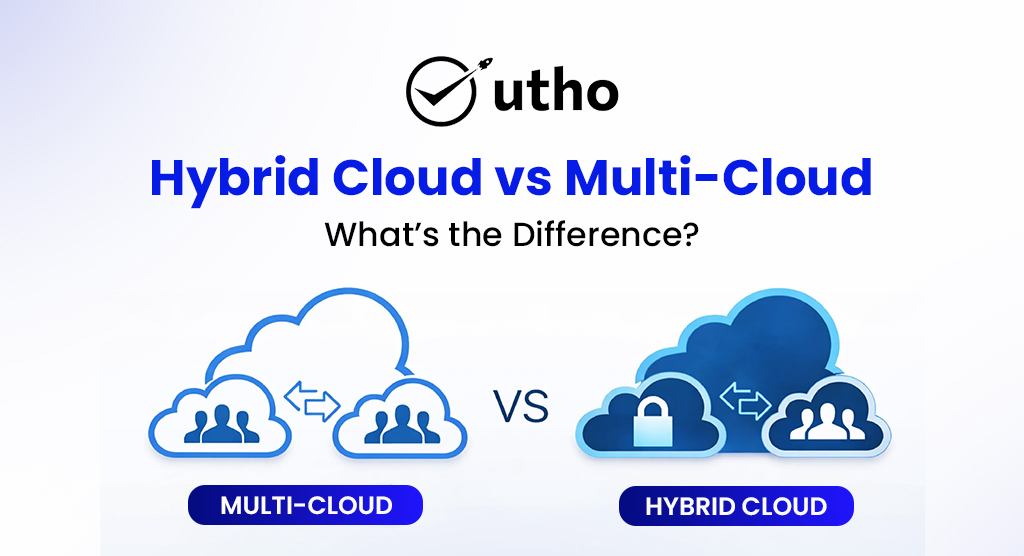
Today cloud technology is becoming a very important part of many businesses. Big companies and small shops both use cloud services in their daily work. The cloud helps people save files, use apps, keep information safe and do work faster.
Many business owners also try to understand Hybrid Cloud and Multi Cloud because choosing the right cloud system can help businesses work better and grow faster. Many people also search for the hybrid cloud and multi cloud difference to understand which cloud model is better for their business. Many beginners also compare Hybrid Cloud vs Multi-Cloud to better understand cloud systems.
Cloud technology helps companies save time, improve work speed and manage information more safely. Because of this many businesses now depend on cloud services for daily work and better performance. Cloud technology also helps people work from anywhere. This makes work easier and more comfortable.
Many people get confused when they hear Hybrid Cloud and Multi Cloud. The names sound similar so people think both are the same. But they are different and work in different ways. Companies choose them based on their needs.
Many users search for the hybrid cloud and multi cloud difference to clearly understand how both cloud systems work. Many companies also search for the difference between hybrid cloud and multi cloud to understand which cloud setup is better.
Many business owners and people who work with technology search for the difference between Multi Cloud and Hybrid Cloud because they want to know which one is better for speed, safety, flexibility and saving money. Both cloud systems help businesses manage work and data but they do it in different ways. Many people also compare multi cloud vs hybrid cloud before making business decisions.
A Hybrid Cloud means using two types of cloud together. One part is a private cloud which is safer for important information and the other part is a public cloud which is easy to use and gives more space. Companies use Hybrid Cloud when they want to keep important data safe but also want to use public cloud services for normal work.
For example a hospital may keep patient details in a private cloud for safety and use a public cloud for normal office work.
A Multi Cloud means using cloud services from different cloud companies at the same time. Instead of depending on only one company, businesses use many cloud providers to get better speed, flexibility and performance. For example a company may use one cloud service for storing files and another cloud service for running apps. This helps them avoid problems if one service stops working.
Understanding the difference between Hybrid Cloud and Multi Cloud is very important because every business has different needs. Some companies care more about safety and keeping control of their data. Other companies want faster work, more choices and freedom to use different services. Learning the hybrid cloud and multi cloud difference helps businesses choose the right cloud system according to their needs.
In this blog we will explain Hybrid Cloud and Multi Cloud in very simple English with easy examples, benefits, challenges and real life uses. This will help everyone understand the hybrid cloud and multi cloud difference and decide which cloud model is better for their business and why choosing the right cloud system is important. Many people also compare Hybrid Cloud vs Multi-Cloud and multi cloud vs hybrid cloud to better understand cloud strategies.
What is Cloud Computing?
Before learning about Hybrid Cloud and Multi Cloud it is important to first understand what cloud computing means. Many people first search for the hybrid cloud and multi cloud difference before understanding cloud computing but knowing the basics makes it much easier to understand both cloud models.
Cloud computing is a technology that helps people and companies save files software and data on the internet instead of keeping everything on a computer or large machines in one place. In simple words people can open their files and information anytime and from anywhere if they have an internet connection.
Many people first try to understand the difference between hybrid cloud and multi cloud but learning cloud computing basics makes it much easier to understand both cloud systems.
Earlier companies had to buy big computers and expensive storage systems to keep their data safe. This cost a lot of money and also needed more space and care. But now with cloud computing businesses can use online storage and services without spending too much money on expensive machines. This makes work faster, easier and more flexible.
Many people already use cloud computing in daily life without even knowing it. For example when people save photos online, watch videos or use online apps they are using cloud technology. It helps people access their information easily and makes daily work simple and quick.
Understanding cloud basics also helps people better understand the hybrid cloud and multi cloud difference because both cloud models are built using cloud computing technology.
Examples of Cloud Computing
- Google Drive stores files online so people can access them from any device anytime.
- Gmail saves emails on cloud servers instead of only keeping them on a computer.
- Netflix uses cloud systems to stream movies and web shows smoothly for millions of users.
- Google Photos stores pictures online so they do not take too much phone storage.
Popular Cloud Providers
Some of the biggest cloud service providers in the world are:
- Amazon Web Services also called AWS
- Microsoft Azure
- Google Cloud
These cloud platforms help businesses manage websites applications storage security and many other important things. They make work easier, faster and more organized for companies. Understanding cloud basics also helps people clearly understand the difference between hybrid cloud and multi cloud when choosing the right cloud solution for business needs.
Now that you understand cloud computing let us move to the main topic and learn about Hybrid Cloud and Multi Cloud in a very simple way. Many businesses compare multi cloud vs hybrid cloud and Hybrid Cloud vs Multi-Cloud before choosing the best cloud solution.
What is Hybrid Cloud?
A Hybrid Cloud is a cloud system that uses two different types of cloud together. These are:
- Private Cloud
- Public Cloud
In a Hybrid Cloud companies keep very important and private information in a private cloud because it is more secure. At the same time normal work and less important tasks are done on a public cloud because it is faster and easier to use.
In simple words businesses divide their work between private and public cloud systems so they can get both safety and flexibility at the same time. Many companies compare Hybrid Cloud vs Multi-Cloud to understand which cloud setup gives better safety and flexibility.
Simple Example to Understand Hybrid Cloud
Imagine your school bag.
You keep important papers or special things inside a small zip pocket to keep them safe. But your books, notebooks and lunch box stay in the main part of the bag because they are easier to take out.
A Hybrid Cloud works in the same way. Important business information stays safe in a private cloud while normal work happens in a public cloud. This example also helps people understand the difference between hybrid cloud and multi cloud in an easier way.
Example of Hybrid Cloud in Real Life
For example a bank may save customer passwords, account details and important money information in a private cloud to keep everything safe and secure.
At the same time the bank may run its mobile app website or customer help system on a public cloud so people can use them quickly and easily.
This type of setup is called a Hybrid Cloud.
When businesses compare Hybrid Cloud and Multi Cloud many companies choose Hybrid Cloud if they want stronger security better control of their information and safer ways to protect private data. Many businesses also compare multi cloud vs hybrid cloud before selecting the right cloud model.
What is Multi-Cloud?
A Multi Cloud strategy means using services from more than one cloud company at the same time. Instead of using only one cloud provider businesses use different cloud services for different work based on their needs.
In simple words a company does not keep all its work with one cloud company. It uses different cloud services to get better speed flexibility and reliability.
Example of Multi Cloud
For example a company may use:
Amazon Web Services for storing data
Google Cloud for Artificial Intelligence and data tools
Microsoft Azure for backup and recovery
Since the company is using many cloud providers together this is called a Multi Cloud setup.
The main reason companies use Multi Cloud is to avoid depending on only one provider. If one cloud service stops working or has a problem other cloud platforms can still continue working. This helps reduce risks and keeps business work running smoothly.
For example imagine an online shopping website using only one cloud provider. If that provider stops working during a big sale the business may lose customers and money. But with a Multi Cloud system the company can still use other cloud providers and avoid major problems.
That is why many companies compare multi cloud vs hybrid cloud before choosing the best option for their business.
Hybrid Cloud vs Multi Cloud Main Difference
When people talk about Hybrid Cloud and Multi Cloud the biggest difference is how both systems work.
A Hybrid Cloud uses both a private cloud and a public cloud together. Companies usually keep important and private information in a private cloud for safety while normal work apps and daily tasks run on a public cloud.
On the other hand Multi Cloud means using services from different cloud companies instead of depending on only one provider.
Simple Difference
Hybrid Cloud means using a private cloud and a public cloud together.
Multi Cloud means using services from different cloud providers at the same time.
This is the biggest difference that many beginners find confusing. Many beginners search for the difference between hybrid cloud and multi cloud to better understand this topic.
To understand it in an easy way think like this.
A Hybrid Cloud is about using different types of cloud together while a Multi Cloud is about using different cloud companies at the same time. This explanation helps people understand the hybrid cloud and multi cloud difference more clearly.
This simple explanation helps people easily understand the difference between Hybrid Cloud and Multi Cloud.
Easy Example to Understand
Let us understand Hybrid Cloud and Multi Cloud with a very simple example.
Hybrid Cloud Example
Imagine you eat homemade food most of the time but sometimes order food online when you are busy.
This means you are using home food and outside food together. In the same way companies use both private cloud and public cloud together in a Hybrid Cloud system.
Multi Cloud Example
Now imagine you order food from different apps like Zomato Swiggy or Domino’s depending on price speed or special offers.
Zomato and Domino’s are examples of different services people may choose based on what works best for them.
This is similar to a Multi Cloud system where companies use different cloud providers instead of depending on only one company.
These simple examples make Hybrid Cloud and Multi Cloud very easy to understand for everyone. Many people compare Hybrid Cloud vs Multi-Cloud to decide which option fits their needs better.
Why Do Companies Use Hybrid Cloud?
Many businesses choose a Hybrid Cloud because it gives a good balance between safety flexibility and saving money. Companies can decide which information should stay private and which work can happen on a public cloud. This gives businesses better control over their systems and important data. Many companies also search for the hybrid cloud and multi cloud difference to understand which cloud model fits their business needs better.
When companies compare Hybrid Cloud and Multi Cloud many businesses that handle private information often choose Hybrid Cloud. This includes banks, hospitals, healthcare companies and government offices because they need stronger safety for important data. Many companies also compare Hybrid Cloud vs Multi-Cloud before making cloud decisions.
Benefits of Hybrid Cloud
1. Better Security
One of the biggest benefits of a Hybrid Cloud is better security. Companies can keep important and private information like customer details, passwords, account information and money records inside a private cloud where safety is stronger and data is more protected.
This helps businesses keep important information safe from online risks and gives them better control over who can access the data. At the same time less important work can run on a public cloud which helps companies work faster and more easily.
2. More Flexibility
Hybrid cloud gives businesses more flexibility because companies can choose where to store data and run applications.
If certain work needs high security, it stays in the private cloud. If extra computing power is needed, businesses can quickly use public cloud resources.
This makes operations more efficient and easier to manage.
3. Lower Cost
Running everything on private servers can be very expensive. With a hybrid cloud model, companies only keep important workloads private and move normal tasks to the public cloud.
This helps businesses save money while still maintaining security where needed.
4. Better Performance
A Hybrid Cloud can help businesses work faster and better. Important work and private information stay in a safe and secure place while extra work or heavy traffic can be managed through a public cloud.
For example during festival sales an online shopping company may get many visitors on its website at the same time. In this situation the company can use a public cloud to handle extra website traffic so the website does not become slow or stop working.
These benefits help people better understand the difference between Hybrid Cloud and Multi Cloud and why many businesses choose Hybrid Cloud for better safety and performance. Understanding the hybrid cloud and multi cloud difference also helps companies decide the right cloud strategy for better performance and security.
Why Do Companies Use Multi Cloud?
Just like Hybrid Cloud Multi Cloud is also becoming very popular among businesses. Many companies choose Multi Cloud because it gives them more freedom better performance and access to useful features from different cloud companies.
Many business owners also want to understand the hybrid cloud and multi cloud difference so they can choose the best option for flexibility speed and better performance.
Instead of depending on only one cloud provider businesses divide their work between different cloud services. This helps reduce risks improve speed and make systems more reliable.
Benefits of Multi Cloud
1. No Dependence on One Provider
One of the biggest benefits of Multi Cloud is that businesses do not depend on only one cloud company.
If one cloud service stops working or has technical problems the company can still continue work by using another cloud provider.
This helps businesses avoid major problems and keeps work running smoothly without interruption.
Many companies compare multi cloud vs hybrid cloud because they want a system that reduces risks and avoids depending on only one provider.
2. Access to the Best Features
Every cloud company offers different tools and benefits.
For example one provider may have better storage services while another may offer smarter Artificial Intelligence tools. A different provider may give cheaper backup services.
With a Multi Cloud system companies can choose the best features from different cloud providers instead of depending on only one company.
Understanding the hybrid cloud and multi cloud difference helps businesses choose the right cloud features based on what they need most.
3. Better Backup and Reliability
Using many cloud providers helps businesses keep their information safer and improves backup options.
If data gets lost or one cloud server stops working, important information can still stay safe with another provider. This helps companies continue work without facing major problems.
The hybrid cloud and multi cloud difference becomes easier to understand when businesses compare safety backup and reliability features.
4. Better Pricing and Cost Savings
Different cloud companies have different prices for their services. Businesses can compare prices and choose cheaper or better services for different tasks.
This helps companies save money while still getting good speed and strong performance.
These benefits make it easier to understand the Hybrid Cloud vs Multi-Cloud and explain why many modern businesses are choosing Multi Cloud systems.
Understanding the multi cloud vs hybrid cloud comparison helps businesses choose the right cloud setup based on their budget speed and business needs.
Real Life Examples of Hybrid Cloud and Multi Cloud
Understanding Hybrid Cloud and Multi Cloud becomes much easier when we look at real life examples. Many famous companies already use these cloud systems to improve speed safety and better performance.
Netflix
Netflix has millions of people watching movies and web series every day. Many users watch videos at the same time so the company needs strong cloud support to handle heavy traffic.
Netflix uses cloud technology to store videos, improve streaming speed and manage millions of users smoothly.
When people talk about Hybrid Cloud vs Multi Cloud companies like Netflix are often discussed because large platforms need flexible and reliable systems to avoid problems and downtime. This also helps people better understand the hybrid cloud and multi cloud difference in real life.
Banks
Banks are one of the best real life examples of Hybrid Cloud.
Banks manage very private and important information such as customer passwords, account details and money records. Because safety is very important, banks usually keep sensitive information in a secure private cloud where data stays more protected.
At the same time banks may use a public cloud for normal work like websites, mobile banking apps or customer support systems. This helps them work faster while still keeping important information safe.
Hospitals
Hospitals also often use Hybrid Cloud systems.
Patient health records, medical reports and other private information are usually kept in a private cloud to keep everything safe and protect patient privacy. Hospitals also follow strict health rules so keeping important data secure is very important.
At the same time hospitals may use public cloud services for booking appointments online, talking to doctors through video calls or helping staff communicate better inside the hospital.
This example helps people understand the difference between hybrid cloud and multi cloud in a very simple and practical way.
Hybrid Cloud vs Multi Cloud Which One is Better?
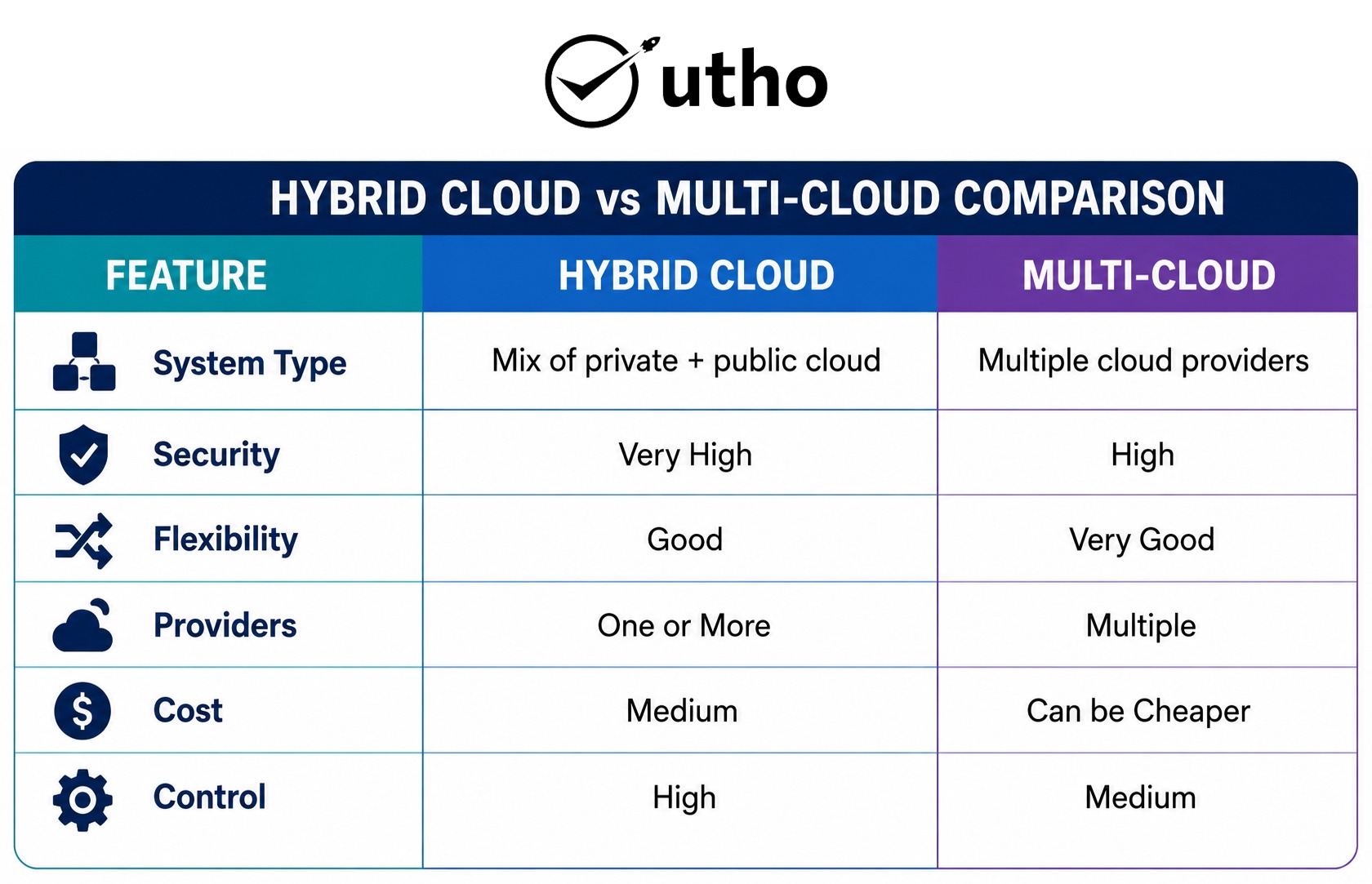
When people compare Hybrid Cloud and Multi Cloud one common question comes to mind which one is better.
The truth is there is no one answer that works for everyone because every business has different needs. The best choice depends on things like safety, budget flexibility and what the company wants to achieve.
If a business wants stronger security and better control of important information then Hybrid Cloud may be a better choice. But if a company wants more flexibility, better performance and services from different cloud providers then Multi Cloud can be a good option.
Both cloud systems have their own benefits and businesses choose them based on what works best for their goals and daily work. Many companies compare Hybrid Cloud vs Multi-Cloud before making a final decision.
Hybrid Cloud vs Multi-Cloud: Which One is Better?
When comparing Hybrid Cloud vs Multi-Cloud, many people ask one common question: Which option is better?
The truth is that there is no single answer because every business has different needs. The best choice depends on factors like security, budget, flexibility, and company goals.
Choose Hybrid Cloud If:
A Hybrid Cloud may be the better option if:
- Security matters the most
- Your business handles private or sensitive data
- You need strong control over systems and information
- You want to balance private security with public cloud performance
For example, banks, government organizations, and healthcare companies often prefer hybrid cloud systems.
Choose Multi-Cloud If:
A Multi-Cloud strategy may be better if:
- You want more flexibility
- You do not want to depend on one cloud provider
- You need strong backup options
- You want to use the best features from different providers
For example, tech companies and large online businesses often prefer multi-cloud for better performance and reliability.
This is exactly why businesses spend time comparing multi cloud vs hybrid cloud before making a final decision.
Problems in Hybrid Cloud
Even though hybrid cloud offers many benefits, it also comes with some challenges.
1. Hard to Manage
Managing both private and public cloud environments together can become difficult.
Companies need skilled IT teams to make sure everything works smoothly between both systems.
2. Cost Can Increase
Although hybrid cloud helps save money in some areas, maintaining private infrastructure can still be expensive.
Private servers, maintenance, and security systems often require extra investment.
3. Setup Takes Time
Building a proper hybrid cloud system is not always easy. Companies may take time to connect private and public environments correctly.
Many businesses face challenges during setup, which is one reason people search for multi cloud vs hybrid cloud to understand which model is easier to manage.
Problems in Multi-Cloud
Like hybrid cloud, multi-cloud also has some disadvantages.
1. Complex Management
Managing multiple cloud providers at the same time can create confusion.
Every provider has different dashboards, tools, and systems, making management more complicated.
2. Security Risks
Using different providers means handling multiple security settings and permissions.
If not managed properly, this can increase security risks.
3. Higher Training Requirements
Employees and IT teams must understand multiple cloud platforms.
This means businesses may need extra training, which can take time and money.
These challenges further explain the hybrid cloud and multi cloud difference and why companies carefully evaluate both options.
Future of Cloud Computing
Cloud technology is growing very fast and businesses around the world are using cloud services more every year.
Experts believe that both Hybrid Cloud and Multi Cloud will become even more popular in the future because companies want better flexibility, stronger safety and faster performance.
In the future some businesses may even use both Hybrid Cloud and Multi Cloud together to get the benefits of both systems.
As technology keeps improving companies will continue learning about the difference between Hybrid Cloud and Multi Cloud so they can choose the best system for long term growth and success.
Conclusion
Now you have a clear understanding of Hybrid Cloud and Multi Cloud in very simple and easy words. Both cloud systems are used by many businesses but they are made for different needs and different types of work.
Many people get confused when comparing Hybrid Cloud and Multi Cloud because both use cloud services. But the easiest way to remember the difference is very simple.
Hybrid Cloud means using a private cloud and a public cloud together.
Multi Cloud means using many cloud providers at the same time.
This simple idea makes it much easier for beginners to understand the difference between Hybrid Cloud and Multi Cloud.
In real life there is no one perfect option for every business. The right choice depends on what a company needs.
Some businesses care more about safety and keeping information private while others want better flexibility faster performance and freedom from depending on only one cloud company.
If a company handles very private information and wants stronger control over its systems then Hybrid Cloud is usually a better choice. Industries like banks hospitals
and government offices often choose Hybrid Cloud because it gives better safety and data control.
On the other hand if a company wants more flexibility, stronger backup systems and the best services from different cloud providers then Multi Cloud can be a smarter choice.
In the end understanding the difference between Hybrid Cloud and Multi Cloud becomes easy when you think about three simple things: safety, flexibility and business goals. By choosing the right cloud system businesses can work better, avoid problems and grow faster in today’s digital world.
How Cloud Infrastructure Solutions Support Modern Business Needs
In today’s digital world, businesses need cloud infrastructure solutions that can balance security, flexibility, and performance. This is why many companies evaluate different cloud environments and infrastructure providers based on their business requirements, where solutions can be aligned with operational goals, such as Utho.
1. Flexible Cloud Environment
Every business has different needs. Some companies require highly secure environments, while others need scalable cloud resources to handle growing workloads.
This is why businesses often prefer cloud solutions that provide flexibility and support smooth operations according to changing requirements.
2. Security and Better Control
Data security has become one of the most important priorities for modern businesses, especially when handling sensitive customer information.
Because of this, organizations often explore infrastructure options that support better control, secure access, and safer data management for business operations.
3. Scalable Performance for Growing Businesses
As businesses grow, their technology needs also increase.
Cloud infrastructure plays an important role here by helping companies manage increasing traffic, storage demands, and application performance more efficiently through scalable systems.
4. Reliable Business Operations
Maintaining business continuity is important for every organization. Reliable cloud infrastructure helps businesses reduce downtime risks and keep operations running smoothly.
This is one reason why companies consider long-term reliability and performance when choosing the right cloud strategy. As businesses continue comparing Hybrid Cloud and Multi-Cloud models, many organizations also evaluate cloud infrastructure platforms that align with their operational needs, flexibility requirements, and long-term business goals. Utho can be considered part of this growing cloud ecosystem, where businesses explore infrastructure options based on their specific workloads and operational priorities.