
Artificial Intelligence has rapidly moved from research labs to mainstream business applications.
Today, Indian startups are deploying AI across customer support, software development, healthcare, finance, manufacturing, retail, and enterprise automation. From LLM-powered chatbots to multimodal AI agents, inference has become the foundation of modern AI applications. While model training often grabs the headlines, the real operational challenge begins after deployment—AI inference.
Every prompt sent to a Large Language Model (LLM), every image generated, every recommendation delivered, and every prediction made by an AI application depends on inference. As AI adoption grows, inference becomes the largest recurring infrastructure expense for many businesses. Choosing the right GPU is therefore no longer just an engineering decision—it directly impacts latency, scalability, infrastructure costs, and long-term profitability. Businesses evaluating GPU Cloud India solutions often compare deployment flexibility before making infrastructure decisions.
For startups, the decision is even more critical. Budgets are limited, infrastructure teams are lean, and every technology investment must deliver measurable value. Some organizations require the highest possible inference performance, while others prioritize affordability, power efficiency, or deployment flexibility. Selecting the wrong GPU can lead to unnecessary costs, underutilized resources, or infrastructure that struggles to scale as workloads increase. Many startups therefore look for AI GPU Rental India services to reduce upfront infrastructure investment.
This is where the gpu comparison india discussion becomes important. Instead of asking “Which GPU is the most powerful?”, startups should ask “Which GPU delivers the best value for my AI workload?”
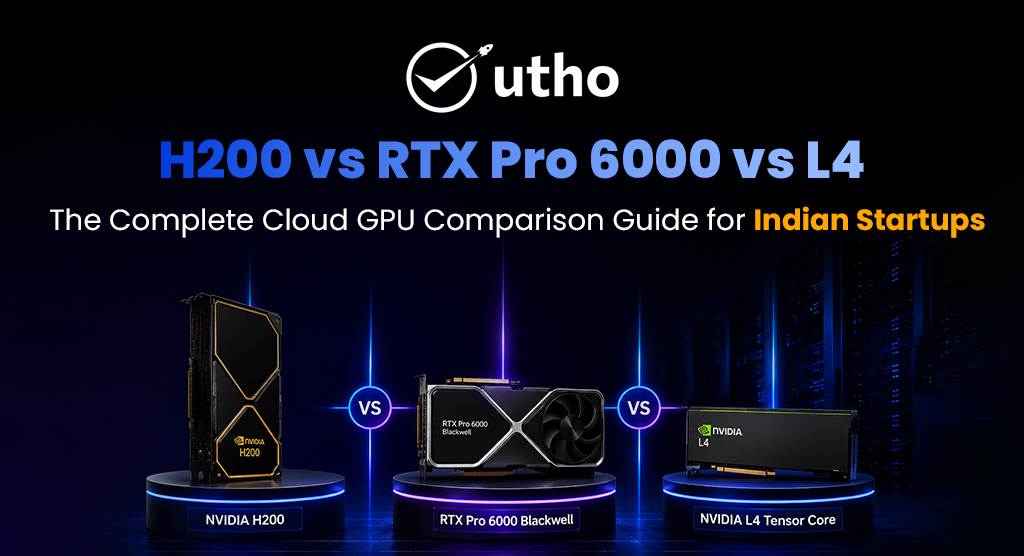
Today, three NVIDIA GPUs dominate cloud AI inference deployments:
- NVIDIA H200 – Built for enterprise AI, large-scale inference, and multi-GPU deployments. Organizations planning large deployments often choose to Rent NVIDIA H200 GPU resources instead of purchasing expensive hardware.
- NVIDIA RTX PRO 6000 Blackwell – Designed for enterprise AI, high-memory inference, AI agents, and on-premises or cloud deployments. Many enterprises also prefer to Rent RTX PRO 6000 Blackwell instances for flexible AI infrastructure.
- NVIDIA L4 Tensor Core – Optimized for energy-efficient inference, computer vision, video AI, and lightweight generative AI workloads.
Each GPU targets a different type of AI deployment. While they all support AI inference, they differ significantly in memory capacity, architecture, performance, power consumption, scalability, and total cost of ownership. Platforms offering RTX PRO 6000 Blackwell Cloud deployments make it easier for businesses to scale AI workloads without investing in dedicated hardware.
In this gpu comparison india guide, we’ll compare these three GPUs across every major category—from hardware specifications and inference performance to real-world AI workloads and infrastructure costs—helping Indian startups choose the right GPU for their next AI deployment.
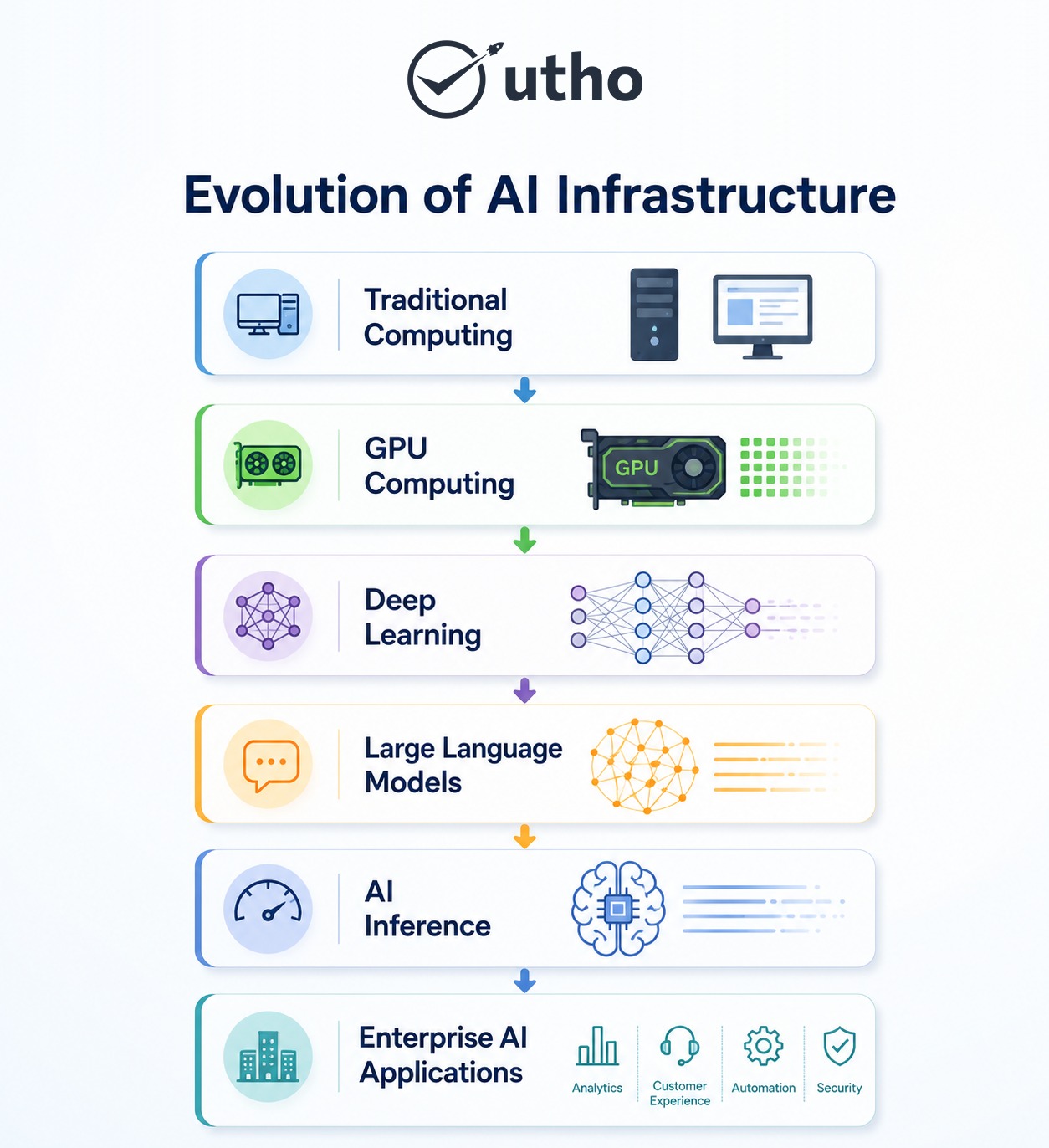
Why GPU Selection Matters for Indian Startups
Over the last few years, India’s AI ecosystem has expanded rapidly. Startups are no longer building simple automation tools—they are deploying sophisticated AI systems that process millions of requests every month.
Whether it’s an AI-powered customer support platform, a legal document analysis tool, a medical imaging application, or a multilingual chatbot, every production AI system depends on reliable GPU infrastructure. Choosing an experienced NVIDIA H200 Cloud Provider can simplify enterprise AI deployment while ensuring scalability.
However, not every AI workload requires the same level of compute power.
For example:
- A document OCR platform may only need a lightweight inference GPU capable of processing thousands of scanned pages efficiently.
- A startup building an AI coding assistant may require significantly more GPU memory to serve large language models with low latency.
- A healthcare company deploying multiple AI models simultaneously may prioritize higher memory capacity and enterprise-grade reliability.
- A generative AI platform serving thousands of concurrent users may require multi-GPU infrastructure capable of handling continuous inference requests.
This is why a proper gpu comparison india should never focus only on specifications like CUDA cores or memory size. Instead, startups must evaluate how each GPU aligns with their product roadmap, expected user traffic, infrastructure budget, and future scalability. Many growing businesses now evaluate Enterprise GPU Cloud India offerings to balance scalability with predictable infrastructure costs.
Another important consideration is deployment flexibility.
Historically, organizations built AI infrastructure by purchasing dedicated GPU servers. Today, cloud GPU platforms have made enterprise-grade AI infrastructure accessible on demand, allowing startups to scale compute resources without large capital investments.
As AI becomes more central to business operations, selecting the right cloud GPU can improve deployment speed, reduce operational complexity, and make infrastructure costs more predictable. Modern GPU Cloud India platforms also help startups deploy AI faster while reducing operational overhead.
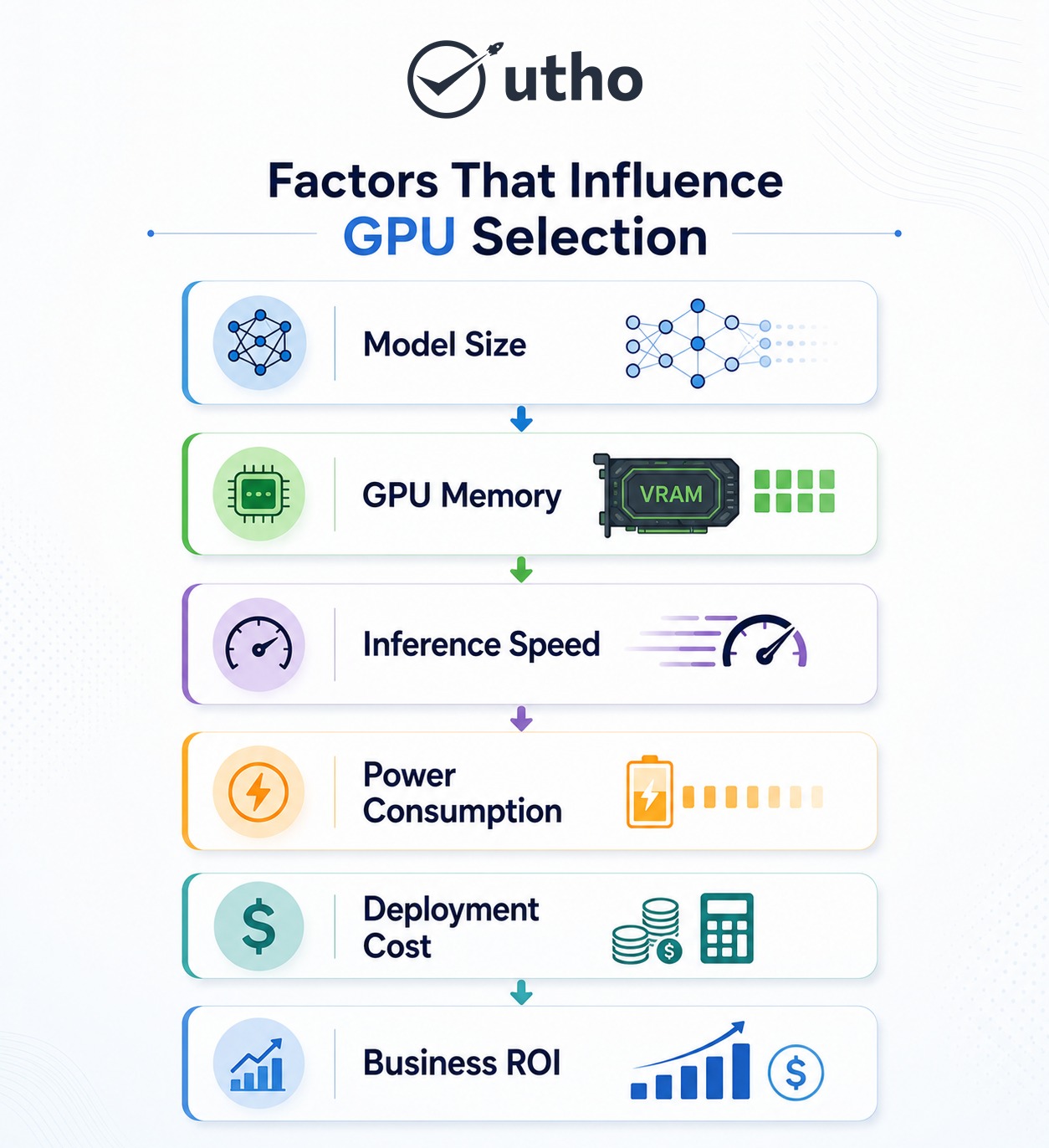
Meet the Three GPUs
Although all three GPUs support AI inference, they were designed with different deployment goals in mind.
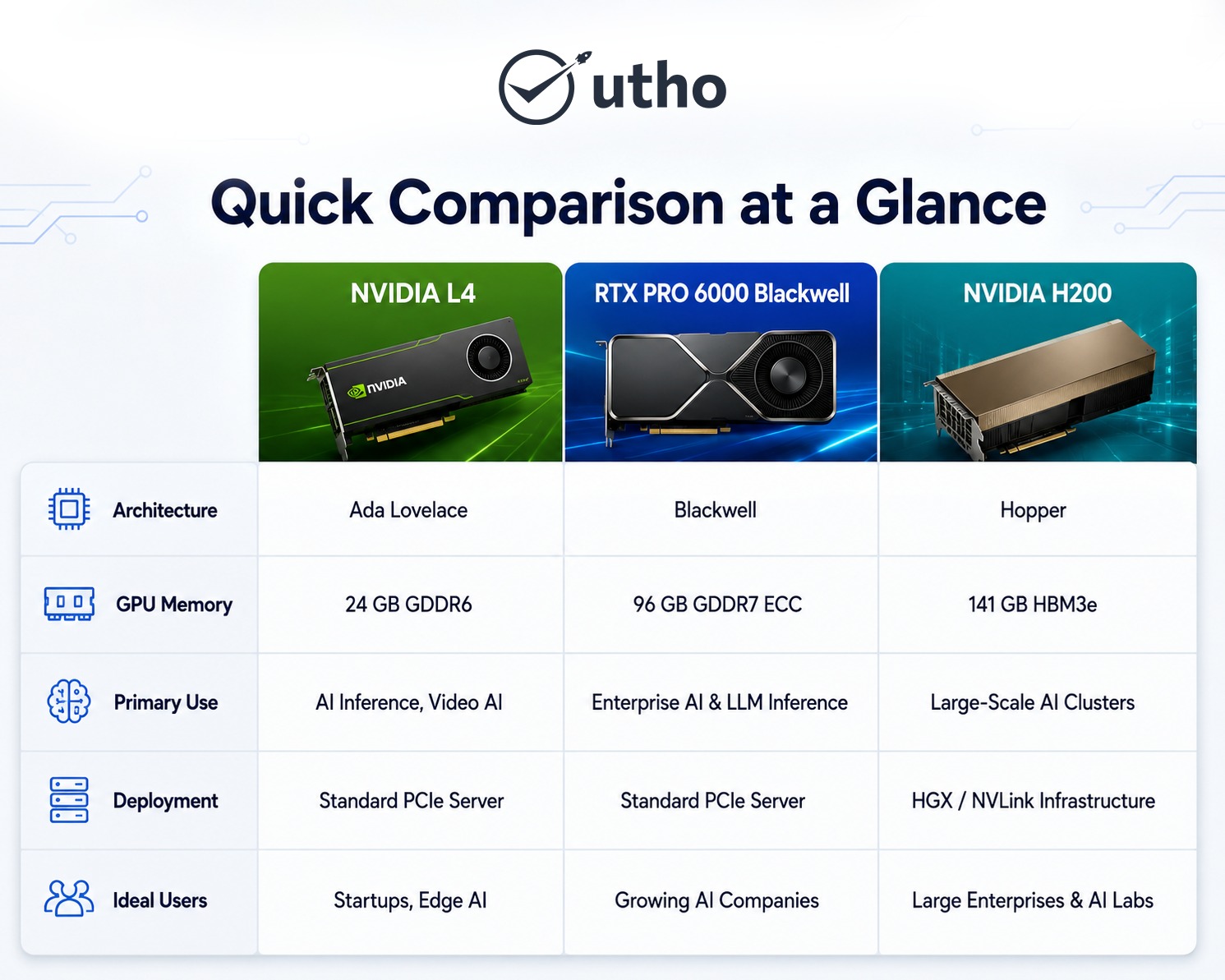
| GPU | Primary Focus | Best For |
| NVIDIA H200 | Enterprise AI & Large LLMs | Massive inference clusters, multi-GPU serving, hyperscale AI |
| RTX PRO 6000 Blackwell | Enterprise AI & High-Memory Inference | AI agents, RAG, LLM deployment, image generation |
| NVIDIA L4 Tensor Core | Energy-Efficient AI Inference | OCR, video analytics, computer vision, lightweight AI |
This high-level comparison already highlights an important takeaway. There is no universally “best” GPU. Each one is optimized for a different class of AI workload.
For Indian startups evaluating cloud infrastructure, the goal should be to match GPU capabilities with actual business requirements rather than selecting hardware based purely on peak performance. Businesses can Rent RTX PRO 6000 Blackwell or choose RTX PRO 6000 Blackwell Cloud deployments depending on their workload requirements.
This table provides a quick overview, but specifications alone do not tell the full story. In the following sections, we’ll explore how these GPUs differ in architecture, memory, inference performance, deployment flexibility, and overall cost—so you can determine which option is the best fit for your AI startup.
NVIDIA H200 Overview
The NVIDIA H200 Tensor Core GPU is NVIDIA’s flagship Hopper-based accelerator designed specifically for enterprise AI, large-scale inference, and high-performance computing. Unlike workstation GPUs, the H200 is built for hyperscale data centers where multiple GPUs work together to serve massive AI workloads simultaneously. Many organizations choose to Rent NVIDIA H200 GPU instances through a trusted NVIDIA H200 Cloud Provider instead of investing in on-premises infrastructure.
Its biggest advantage is memory.
The H200 features 141 GB of HBM3e memory with extremely high memory bandwidth, allowing it to process much larger AI models than most PCIe GPUs. This makes it particularly valuable for organizations serving large language models (LLMs), AI assistants, enterprise copilots, and high-concurrency inference APIs.
Another major strength is NVLink. Instead of operating as independent GPUs, multiple H200s can communicate through ultra-high-speed NVLink interconnects. This dramatically reduces communication overhead during multi-GPU inference and enables organizations to deploy models that require hundreds of gigabytes of GPU memory.
However, these advantages come with higher infrastructure requirements. H200 deployments typically require HGX systems, specialized cooling, enterprise-grade networking, and significantly larger infrastructure budgets than standard PCIe GPU servers. Organizations looking for Enterprise GPU Cloud India solutions often rely on an experienced NVIDIA H200 Cloud Provider for these advanced deployments.
For startups building AI platforms that serve millions of inference requests every day, the H200 provides unmatched scalability. But for many organizations, that level of infrastructure is unnecessary during the early stages of growth. In such cases, AI GPU Rental India, RTX PRO 6000 Blackwell Cloud, or the option to Rent NVIDIA H200 GPU can provide a more flexible and cost-effective path to AI deployment.
RTX PRO 6000 Blackwell Overview
The RTX PRO 6000 Blackwell represents a different approach to enterprise AI infrastructure. Instead of targeting hyperscale data centers, it focuses on delivering high-memory AI inference inside standard PCIe servers, making it a strong choice for RTX PRO 6000 Blackwell Cloud deployments.
Built on NVIDIA’s latest Blackwell architecture, the RTX PRO 6000 includes 96 GB of GDDR7 ECC memory, fifth-generation Tensor Cores, fourth-generation RT Cores, and PCIe Gen5 connectivity. This combination makes it one of the most capable workstation and enterprise inference GPUs currently available.
One of its biggest advantages is deployment simplicity.
Unlike the H200, which requires HGX infrastructure and NVLink-based systems, the RTX PRO 6000 can be installed inside conventional enterprise servers. Organizations can deploy powerful AI infrastructure without redesigning their entire data center, and many businesses now prefer to Rent RTX PRO 6000 Blackwell through Enterprise GPU Cloud India providers.
This flexibility makes the RTX PRO 6000 an excellent choice for:
- Enterprise AI assistants
- Retrieval-Augmented Generation (RAG)
- AI agents
- Code generation
- Image generation
- Medium to large language models
- Private AI deployments
- Sovereign AI infrastructure
For many organizations performing a gpu comparison india, the RTX PRO 6000 often delivers the best balance between enterprise performance, deployment flexibility, and infrastructure cost. Businesses evaluating RTX PRO 6000 Blackwell Cloud services or planning to Rent RTX PRO 6000 Blackwell can scale AI infrastructure without investing in specialized hardware.
NVIDIA L4 Tensor Core Overview
The NVIDIA L4 Tensor Core GPU is designed with efficiency in mind. Rather than maximizing raw compute power, NVIDIA optimized the L4 for production AI inference, video processing, computer vision, and cloud-native AI applications running on GPU Cloud India platforms.
Powered by the Ada Lovelace architecture, the L4 includes 24 GB GDDR6 memory, fourth-generation Tensor Cores, dedicated video encoding and decoding engines, and exceptionally low power consumption.
Its greatest strength is performance per watt.
Because the L4 consumes significantly less power than larger enterprise GPUs, cloud providers frequently deploy it for inference workloads that prioritize efficiency over maximum model size. Many startups also choose AI GPU Rental India services instead of purchasing dedicated GPU hardware.
Common use cases include:
- OCR platforms
- Document AI
- Intelligent video analytics
- Image classification
- Recommendation engines
- Retail AI
- Smart surveillance
- Voice AI
- Chatbots
- Edge AI deployments
For startups launching their first AI product, the L4 often provides sufficient inference performance while keeping cloud infrastructure costs under control. This is one reason why GPU Cloud India and AI GPU Rental India solutions continue to grow in popularity.
Title: Deployment Architecture of the Three GPUs
NVIDIA L4
↓
Cloud Platform
↓
Video AI
↓
Computer Vision
↓
Enterprise Applications
RTX PRO 6000
↓
PCIe Server
↓
Enterprise AI
↓
LLM Inference
↓
AI Agents
H200
↓
HGX Server
↓
NVLink Cluster
↓
Large LLMs
↓
High-Concurrency AI
Hardware Architecture Comparison
Although these GPUs all accelerate AI inference, their underlying architecture is very different.
The L4 Tensor Core is built around energy efficiency. It provides enough memory and compute power for lightweight and medium-sized AI models while maintaining extremely low power consumption.
The RTX PRO 6000 Blackwell focuses on balancing high performance with deployment flexibility. It brings enterprise-class memory capacity and modern AI acceleration into standard PCIe infrastructure, making it suitable for businesses that need large-model inference without investing in specialized HGX servers.
The H200, on the other hand, is designed for organizations operating at hyperscale. Its HBM3e memory and NVLink connectivity make it the preferred choice for extremely large AI models and high-throughput inference clusters. Organizations looking to Rent NVIDIA H200 GPU often work with a trusted NVIDIA H200 Cloud Provider to deploy these workloads efficiently.
This architectural difference explains why these GPUs are rarely direct competitors. Instead, they serve different segments of the AI infrastructure market. Businesses selecting an Enterprise GPU Cloud India platform or choosing to Rent NVIDIA H200 GPU through an experienced NVIDIA H200 Cloud Provider can align infrastructure with long-term AI growth.
Hardware Comparison
| Specification | NVIDIA L4 | RTX PRO 6000 Blackwell | NVIDIA H200 |
| Architecture | Ada Lovelace | Blackwell | Hopper |
| GPU Memory | 24 GB GDDR6 | 96 GB GDDR7 ECC | 141 GB HBM3e |
| Memory Type | GDDR6 | GDDR7 ECC | HBM3e |
| PCIe Support | Gen4 | Gen5 | HGX / SXM |
| Tensor Cores | 4th Generation | 5th Generation | 4th Generation |
| RT Cores | 3rd Generation | 4th Generation | Not Designed for RT |
| ECC Memory | yes | Yes | Yes |
| Deployment | Standard PCIe | Standard PCIe | HGX / NVLink Infrastructure |
| Primary Focus | Efficient AI Inference | Enterprise AI | Large AI Clusters |
Rather than focusing only on raw specifications…
Rather than focusing only on raw specifications, startups should evaluate how these hardware differences affect deployment, maintenance, scalability, and long-term infrastructure planning. Whether deploying on GPU Cloud India or building private infrastructure, choosing the right architecture has a lasting impact.
For example, an AI startup deploying OCR, document intelligence, or customer support automation may never require H200-class hardware. In contrast, a company serving large LLM APIs or building foundation-model-based products could quickly outgrow a lower-memory GPU and may choose to Rent NVIDIA H200 GPU for greater scalability.
This is why a thoughtful gpu comparison india goes beyond specifications and considers the complete deployment lifecycle—from infrastructure setup to operational cost and future scalability.
At this stage of our gpu comparison india, the hardware differences become much more meaningful. While specifications such as CUDA cores and Tensor Cores are important, AI inference performance depends heavily on GPU memory, memory bandwidth, and how efficiently a GPU can serve AI models in production.
For Indian startups deploying AI applications, these factors determine whether a model runs smoothly, how many users can be served simultaneously, and how much infrastructure will cost over time, especially when evaluating an Enterprise GPU Cloud India platform.
Memory Comparison: Why GPU Memory Matters More Than Ever
One of the biggest mistakes startups make is choosing a GPU based only on compute performance while ignoring memory capacity.
In AI inference, GPU memory determines:
- Maximum model size
- Context window support
- Batch size
- Number of concurrent users
- Image generation resolution
- RAG performance
- AI Agent capability
- Overall inference efficiency
Simply put:
If your AI model doesn’t fit inside GPU memory, raw compute power becomes far less important.
This is one of the biggest reasons why enterprise AI deployments are increasingly moving toward higher-memory GPUs.
NVIDIA L4 – 24 GB Memory
The NVIDIA L4 comes with 24 GB GDDR6 memory, which is sufficient for lightweight production inference workloads.
Typical workloads include:
- OCR
- Computer Vision
- Recommendation Systems
- Small Chatbots
- Document Intelligence
- Video Analytics
- Speech Recognition
However, when running larger LLMs or multiple AI models simultaneously, memory becomes the limiting factor.
Developers often need to:
- Quantize models
- Reduce batch sizes
- Offload memory to CPU
- Split workloads across multiple GPUs
All of these approaches reduce inference efficiency.
RTX PRO 6000 Blackwell – 96 GB Memory
The RTX PRO 6000 dramatically changes what can be deployed on a single GPU.
With 96 GB of GDDR7 ECC memory, organizations can comfortably serve:
- Large Language Models
- AI Agents
- RAG Pipelines
- Image Generation
- Coding Assistants
- Enterprise Chatbots
- Multi-modal AI
Many models that require multiple smaller GPUs can instead run efficiently on a single RTX PRO 6000, simplifying infrastructure and reducing operational complexity. Organizations looking for RTX PRO 6000 Blackwell Cloud deployments often prefer this approach, while many also Rent RTX PRO 6000 Blackwell to avoid large upfront investments.
This is one of the biggest reasons the RTX PRO 6000 is gaining popularity in enterprise AI deployments.
NVIDIA H200 – 141 GB HBM3e Memory
The H200 pushes memory capacity even further with 141 GB of HBM3e memory and extremely high bandwidth.
This enables:
- Larger LLM deployment
- Longer context windows
- Higher batch sizes
- Massive concurrent inference
- Multi-GPU serving
- Enterprise AI APIs
- Foundation Models
For organizations serving thousands of simultaneous AI requests, this additional memory provides a significant scalability advantage. Many enterprises work with a trusted NVIDIA H200 Cloud Provider or choose AI GPU Rental India services instead of purchasing dedicated infrastructure.
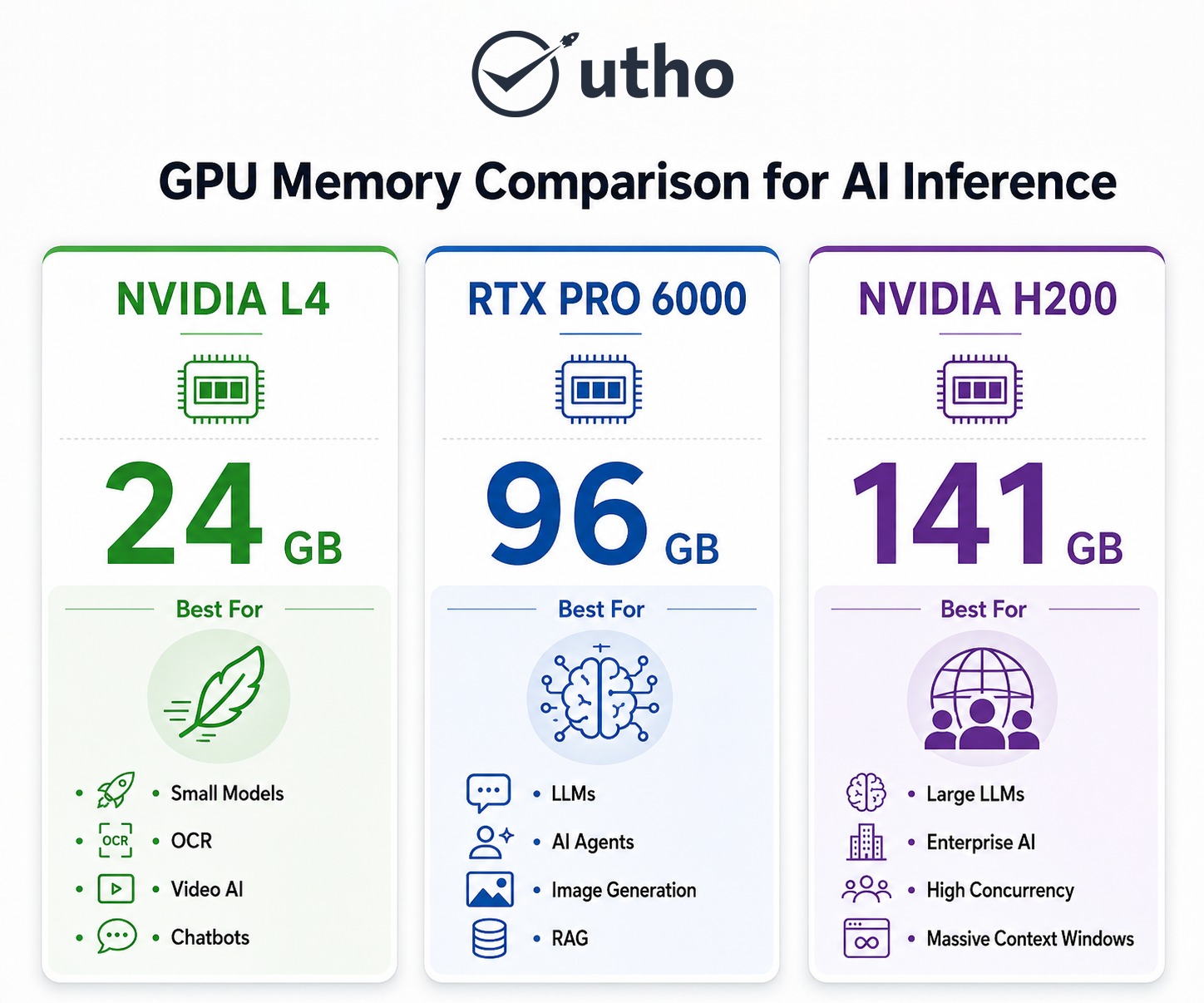
Memory Comparison Table
| Feature | NVIDIA L4 | RTX PRO 6000 Blackwell | NVIDIA H200 |
| GPU Memory | 24 GB GDDR6 | 96 GB GDDR7 ECC | 141 GB HBM3e |
| Best Model Size | Small | Medium to Large | Very Large |
| Multi-Model Serving | Limited | Excellent | Outstanding |
| Long Context Support | Limited | Strong | Best |
| AI Agents | Basic | Excellent | Enterprise Scale |
| Large LLM Deployment | Limited | Very Good | Excellent |
AI Inference Performance
AI inference is where these GPUs spend most of their operational life. Unlike model training, inference focuses on delivering responses quickly, efficiently, and consistently. Performance depends on several factors:
- Model size
- GPU memory
- Memory bandwidth
- Batch size
- Concurrent users
- Software optimization
- Framework compatibility
As AI products scale, even small differences in inference throughput can translate into significant infrastructure savings. Organizations evaluating GPU Cloud India solutions should consider not only benchmark performance but also long-term scalability and deployment flexibility.
NVIDIA L4 Performance
The L4 is optimized for efficient inference rather than maximum throughput.
It performs exceptionally well for:
- OCR platforms
- Video AI
- Vision Transformers
- Retail AI
- Recommendation Engines
- Edge AI
- Document Processing
Its low power consumption also makes it attractive for continuous production workloads where efficiency matters more than raw speed.
For startups launching AI SaaS products, the L4 offers an excellent balance between performance and operating cost. Many early-stage companies begin with AI GPU Rental India services on GPU Cloud India to reduce upfront infrastructure investment.
RTX PRO 6000 Performance
The RTX PRO 6000 targets a completely different performance category.
Its combination of:
- Blackwell architecture
- Fifth-generation Tensor Cores
- 96 GB memory
- PCIe Gen5
- ECC memory
allows it to serve much larger AI models while maintaining strong inference throughput.
Compared with smaller GPUs, it can process larger prompts, support more concurrent inference sessions, and run more demanding enterprise AI workloads without frequent memory limitations.
For many medium-to-large AI deployments, it delivers an excellent balance of performance and deployment flexibility. Businesses looking for RTX PRO 6000 Blackwell Cloud infrastructure often Rent RTX PRO 6000 Blackwell to deploy enterprise AI workloads without investing in dedicated hardware.
NVIDIA H200 Performance
The H200 is engineered for maximum inference throughput.
When deployed inside NVLink-connected HGX systems, multiple H200 GPUs operate almost like a single massive AI accelerator.
This architecture enables:
- High-throughput LLM serving
- Massive concurrent users
- Enterprise AI APIs
- Multi-GPU tensor parallelism
- Large batch inference
- Foundation Model deployment
For organizations operating at hyperscale, the H200 remains one of the strongest inference platforms available. Many enterprises Rent NVIDIA H200 GPU from a trusted NVIDIA H200 Cloud Provider to access this level of performance without building their own HGX infrastructure.
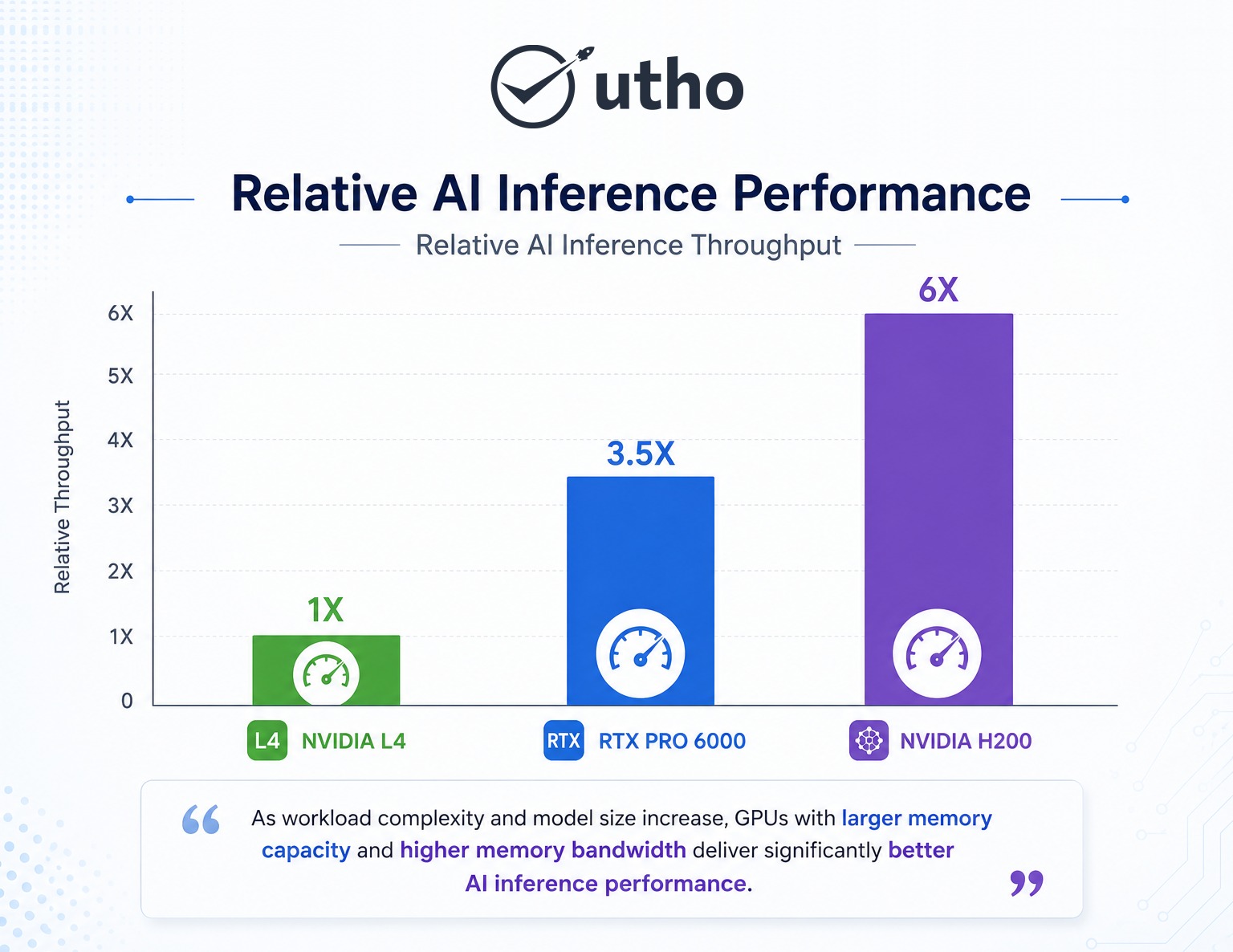
AI Inference Capability Comparison
| Workload | NVIDIA L4 | RTX PRO 6000 | NVIDIA H200 |
| OCR | ⭐⭐⭐⭐⭐ | ⭐⭐⭐⭐⭐ | ⭐⭐⭐⭐ |
| Video AI | ⭐⭐⭐⭐⭐ | ⭐⭐⭐⭐ | ⭐⭐⭐ |
| Computer Vision | ⭐⭐⭐⭐⭐ | ⭐⭐⭐⭐ | ⭐⭐⭐⭐ |
| Image Generation | ⭐⭐⭐ | ⭐⭐⭐⭐⭐ | ⭐⭐⭐⭐⭐ |
| AI Agents | ⭐⭐ | ⭐⭐⭐⭐⭐ | ⭐⭐⭐⭐⭐ |
| RAG Pipelines | ⭐⭐ | ⭐⭐⭐⭐⭐ | ⭐⭐⭐⭐⭐ |
| Enterprise Chatbots | ⭐⭐⭐ | ⭐⭐⭐⭐⭐ | ⭐⭐⭐⭐⭐ |
| Large LLM Serving | ⭐ | ⭐⭐⭐⭐ | ⭐⭐⭐⭐⭐ |
From this comparison, a clear pattern emerges. The L4 is highly efficient for lightweight inference and vision-based workloads. The RTX PRO 6000 is the most versatile option for startups building modern generative AI applications, while the H200 excels when the priority is serving very large models and handling enterprise-scale concurrency. Organizations comparing Enterprise GPU Cloud India providers frequently evaluate RTX PRO 6000 Blackwell Cloud offerings alongside options to Rent NVIDIA H200 GPU through a reliable NVIDIA H200 Cloud Provider, while startups often choose AI GPU Rental India or Rent RTX PRO 6000 Blackwell services for greater flexibility.
Total Cost of Ownership (TCO): Looking Beyond the GPU Price
One of the biggest mistakes startups make is comparing GPUs based only on their hourly rental price or hardware cost. In reality, the total cost of ownership (TCO) includes much more than the GPU itself. Whether you choose AI GPU Rental India services or deploy through an Enterprise GPU Cloud India platform, evaluating the full infrastructure lifecycle is essential.
When evaluating a cloud GPU, consider:
- GPU rental or purchase cost
- Power consumption
- Cooling requirements
- Infrastructure compatibility
- Maintenance
- Scalability
- Deployment time
- Future upgrade flexibility
For Indian startups, infrastructure decisions directly affect burn rate. Choosing a GPU that is oversized for current workloads can increase operational expenses, while selecting an underpowered GPU may require costly migrations later. Many organizations therefore compare GPU Cloud India offerings before deciding whether to Rent RTX PRO 6000 Blackwell or Rent NVIDIA H200 GPU for production AI workloads.
This is why a gpu comparison india should always evaluate the complete infrastructure lifecycle rather than hardware specifications alone. Businesses working with a trusted NVIDIA H200 Cloud Provider or selecting RTX PRO 6000 Blackwell Cloud deployments can reduce operational complexity while keeping future scalability in mind.
Title
Total Cost of Ownership
GPU Cost
│
▼
Power Consumption
│
▼
Cooling
│
▼
Networking
│
▼
Infrastructure
│
▼
Maintenance
│
▼
Actual AI Cost
Cost Comparison
| Cost Factor | NVIDIA L4 | RTX PRO 6000 Blackwell | NVIDIA H200 |
| GPU Cost | Lowest | Moderate | Highest |
| Power Consumption | Very Low | Moderate | High |
| Cooling Requirement | Minimal | Standard | Advanced |
| Infrastructure | Standard PCIe Server | Standard PCIe Server | HGX / NVLink Platform |
| Deployment Complexity | Low | Low | High |
| Long-Term Scalability | Moderate | Excellent | Enterprise Scale |
The table shows that each GPU serves a different purpose.
The L4 minimizes infrastructure costs for lightweight AI inference. The RTX PRO 6000 offers a strong balance of performance and scalability without requiring specialized infrastructure. The H200 delivers maximum enterprise performance but also comes with the highest infrastructure requirements.
Which GPU Fits Your Startup?
Instead of asking “Which GPU is the fastest?”, startups should ask:
“Which GPU matches our product, users, and growth stage?”
The answer depends entirely on your AI workload.
Choose NVIDIA L4 If…
The L4 is ideal for startups focused on efficient inference rather than massive language models.
Typical workloads include:
- OCR platforms
- Video analytics
- Document AI
- Computer vision
- Retail AI
- Recommendation engines
- Customer support chatbots
- Edge AI
If your models fit comfortably within 24 GB of memory, the L4 offers excellent efficiency while keeping infrastructure costs low, especially when deployed on GPU Cloud India through an AI GPU Rental India service.
Choose RTX PRO 6000 Blackwell If…
The RTX PRO 6000 is the most versatile option for modern AI startups.
It is particularly well suited for:
- Enterprise chatbots
- AI copilots
- AI agents
- Retrieval-Augmented Generation (RAG)
- Code generation
- Image generation
- Medium to large LLM inference
- Private AI deployments
Its 96 GB memory allows significantly larger models to run on a single GPU compared to lower-memory alternatives, reducing deployment complexity while maintaining strong inference performance. Many businesses Rent RTX PRO 6000 Blackwell through RTX PRO 6000 Blackwell Cloud platforms to gain enterprise-grade AI performance without investing in dedicated infrastructure.
Choose NVIDIA H200 If…
The H200 is designed for organizations operating AI at enterprise scale.
It is the right choice when your workloads include:
- Large language models
- Multi-GPU inference
- High-concurrency APIs
- Long-context reasoning
- Foundation model serving
- Enterprise AI platforms
- Research environments
For startups building infrastructure similar to large AI platforms, the H200 provides the scalability required to support continuous, high-volume inference. Many organizations choose to Rent NVIDIA H200 GPU from a trusted NVIDIA H200 Cloud Provider instead of purchasing HGX infrastructure.
Decision Matrix
| Startup Requirement | Recommended GPU |
| OCR & Document Processing | NVIDIA L4 |
| Computer Vision | NVIDIA L4 |
| Video AI | NVIDIA L4 |
| Enterprise Chatbot | RTX PRO 6000 |
| AI Agents | RTX PRO 6000 |
| RAG Applications | RTX PRO 6000 |
| Image Generation | RTX PRO 6000 |
| Code Generation | RTX PRO 6000 |
| Large LLM Deployment | NVIDIA H200 |
| Multi-GPU Serving | NVIDIA H200 |
| High-Concurrency AI APIs | NVIDIA H200 |
Title
Which GPU Should You Choose?
Small AI Models
↓
NVIDIA L4
━━━━━━━━━━━━━━━━━━━━
Growing AI Products
↓
RTX PRO 6000 Blackwell
━━━━━━━━━━━━━━━━━━━━
Enterprise AI Platforms
↓
NVIDIA H200
Accessing Enterprise GPUs in India
Selecting the right GPU is only one part of building an AI infrastructure. Organizations must also decide how that infrastructure will be deployed, managed, and scaled as workloads grow over time.
While large enterprises may invest in dedicated GPU clusters, many startups and growing businesses prefer cloud GPU infrastructure because it provides faster access to enterprise hardware without requiring large upfront investments in servers, networking, cooling, and ongoing maintenance.
As AI adoption continues to grow across India, cloud platforms are making enterprise GPUs more accessible for businesses building production AI applications through Enterprise GPU Cloud India offerings.
Among them, Utho Cloud provides access to NVIDIA H200, RTX PRO 6000 Blackwell, and NVIDIA L4 Tensor Core GPUs through its cloud infrastructure. Instead of forcing organizations to choose a single GPU architecture, Utho enables teams to select infrastructure based on the actual workload they are deploying.
Whether a company is running lightweight inference, enterprise AI agents, Retrieval-Augmented Generation (RAG), computer vision pipelines, image generation, or large language model (LLM) serving, each workload has different infrastructure requirements. Having access to multiple GPU options allows engineering teams to optimize both performance and infrastructure costs without redesigning their deployment architecture.
Rather than selecting the most powerful GPU available, organizations should focus on matching GPU capabilities with their production requirements. In many real-world deployments, this workload-first approach delivers better long-term scalability, predictable operational planning, and higher infrastructure efficiency. Businesses often compare RTX PRO 6000 Blackwell Cloud, GPU Cloud India, or a reliable NVIDIA H200 Cloud Provider before making deployment decisions.
Choosing the Right GPU on Utho Cloud
| AI Workload | Recommended GPU | Why It Fits |
| OCR & Document Processing | NVIDIA L4 | Optimized for lightweight inference with excellent power efficiency and lower infrastructure requirements. |
| Computer Vision | NVIDIA L4 | Well-suited for image recognition, video analytics, object detection, and edge AI deployments. |
| AI Chatbots | RTX PRO 6000 Blackwell | 96 GB memory supports larger language models, longer conversations, and higher-quality inference. |
| Enterprise AI Agents | RTX PRO 6000 Blackwell | Handles multi-step reasoning, tool calling, and enterprise automation workloads efficiently. |
| Retrieval-Augmented Generation (RAG) | RTX PRO 6000 Blackwell | Large memory capacity allows bigger vector databases and improved retrieval performance. |
| Image Generation | RTX PRO 6000 Blackwell | High Tensor Core performance and larger VRAM support Stable Diffusion, FLUX, and other generative AI models. |
| Large Language Models (70B–400B+) | NVIDIA H200 | High HBM3e memory bandwidth and NVLink architecture are designed for enterprise-scale inference. |
| High-Concurrency AI APIs | NVIDIA H200 | Built for serving thousands of simultaneous inference requests with low latency. |
| Multi-GPU AI Clusters | NVIDIA H200 | NVLink enables efficient communication across multiple GPUs for large production deployments. |
Why This Matters for Indian Startups
As AI applications move from experimentation to production, infrastructure decisions become just as important as model selection. A GPU that performs well for an AI chatbot may not be the right choice for a large-scale inference platform, and a GPU designed for enterprise AI clusters may be unnecessary for lightweight computer vision workloads.
By providing access to NVIDIA L4, RTX PRO 6000 Blackwell, and NVIDIA H200 on a single cloud platform, Utho Cloud gives startups the flexibility to choose infrastructure according to their current workload while retaining the option to scale as business requirements evolve. This allows engineering teams to focus on building AI applications instead of managing complex GPU infrastructure. Organizations looking to Rent RTX PRO 6000 Blackwell, Rent NVIDIA H200 GPU, or use AI GPU Rental India services can scale without large capital investments.
Final Recommendation
There is no single GPU that is the right choice for every AI application.
The NVIDIA L4 is the most cost-efficient option for lightweight inference, computer vision, OCR, and video AI workloads.
The RTX PRO 6000 Blackwell delivers the best balance of memory, performance, deployment flexibility, and scalability, making it an excellent choice for startups building AI agents, enterprise chatbots, RAG applications, image generation platforms, and medium-to-large LLM deployments.
The NVIDIA H200 remains the preferred solution for organizations running large language models, multi-GPU inference clusters, and high-concurrency enterprise AI services where maximum throughput is essential.
Ultimately, the best choice depends on your workload, expected growth, infrastructure strategy, and budget. A thoughtful gpu comparison india is not about selecting the most powerful GPU—it is about choosing the platform that delivers the best long-term value for your AI business.
Frequently Asked Questions
1. Which GPU is best for AI startups in India?
It depends on the workload. L4 is ideal for lightweight inference, RTX PRO 6000 is the most balanced option for enterprise AI applications, and H200 is best for large-scale LLM deployments.
2. Is RTX PRO 6000 better than NVIDIA L4?
For medium and large AI models, yes. Its 96 GB memory enables larger LLMs, AI agents, and RAG workloads that are difficult to run on a 24 GB GPU.
3. Should startups choose H200 over RTX PRO 6000?
Only if they require enterprise-scale inference, very large language models, or multi-GPU deployments. Many growing AI startups can achieve excellent performance with the RTX PRO 6000.
4. Which GPU is best for OCR and computer vision?
The NVIDIA L4 is highly optimized for OCR, video analytics, and computer vision while maintaining low power consumption.
5. Is renting GPUs better than buying?
For most startups, renting GPUs reduces upfront costs, provides flexibility, and allows infrastructure to scale with business growth through Enterprise GPU Cloud India and AI GPU Rental India platforms.
6. Can I access H200, RTX PRO 6000, and L4 through an Indian cloud provider?
Yes. Several cloud providers in India now offer these GPUs. Utho Cloud is among the providers offering NVIDIA H200, RTX PRO 6000 Blackwell, and NVIDIA L4 Tensor Core instances for AI inference workloads through RTX PRO 6000 Blackwell Cloud services and as a trusted NVIDIA H200 Cloud Provider.