

In today’s digital world every time we open a website we see an address starting with HTTP or HTTPS Most users ignore it but this small difference is very important for security, privacy, SEO and trust on the internet.
In 2026 with increasing cyber threats AI based attacks and more online transactions understanding HTTP vs HTTPS has become very important Modern browsers even show warnings when a site is not secure so HTTPS is now needed for all serious websites.
This guide explains everything in simple words how HTTP and HTTPS work, why HTTPS is now the standard and what has changed in modern web security.
Introduction Why This Difference Matters Today
The internet is now a very important part of our daily life. It is used for communication work and many online services. Almost everything we do today depends on systems that share data in real time.
Some common examples are
- Online banking for money transfer and account details
- Online shopping for buying products and services
- Social media for chatting posting and sharing
- Work tools for meetings and file sharing
- AI tools that give answers and responses
- Cloud systems that store and manage data
In all these cases data is constantly moving between your device and a server This data can include normal information and also sensitive data like passwords messages and bank details.
Every time you open a website your browser sends requests and receives responses in seconds.
This brings an important question
Is this data safe while traveling on the internet
Because this data does not stay only on your device it travels through many networks before reaching the server. During this journey there is always a risk of hacking or data theft if security is weak.
This is where HTTP vs HTTPS becomes important. These two decide how data is shared between browser and website and how safe that data transfer is. Understanding HTTP vs HTTPS is very important in today’s digital world.
What is HTTP?
HTTP stands for HyperText Transfer Protocol It is a basic system used on the internet to send data between a browser and a website server.
In simple words HTTP tells how a browser asks for information from a website and how the website sends the answer back. Every time you open a website HTTP works in the background.
How HTTP Works
When you open a website
- Your browser asks the server for a page
- The server gets the request
- The server sends back data like text images or files
- Your browser shows the website on your screen
This all happens very fast in a fraction of a second so websites open quickly
The Major Problem with HTTP
Even though HTTP is fast and simple, it has a critical weakness: it does not provide security or encryption.
HTTP sends all data in plain text format. This means the information is readable during transmission.
Because of this:
- Passwords can be exposed if intercepted
- Credit card and banking details are not protected
- Personal messages and sensitive data can be accessed by attackers
- Any third person on the same network can read the data
This problem becomes bigger on public WiFi like café airports or shared internet because attackers can easily steal HTTP data.
Because of this HTTP is not safe for websites that use user data or sensitive information.
What is HTTPS
HTTPS stands for HyperText Transfer Protocol Secure It is the safe version of HTTP
In simple words HTTPS is HTTP with security
HTTPS = HTTP + Encryption
Encryption means data is locked in a secret form while sending.
This data is sent in a code form so no one can read it in between only the browser and server can understand it.
So even if someone steals the data they will only see unreadable code.
Understanding https vs http is important to make websites and users more safe.
How HTTPS Works
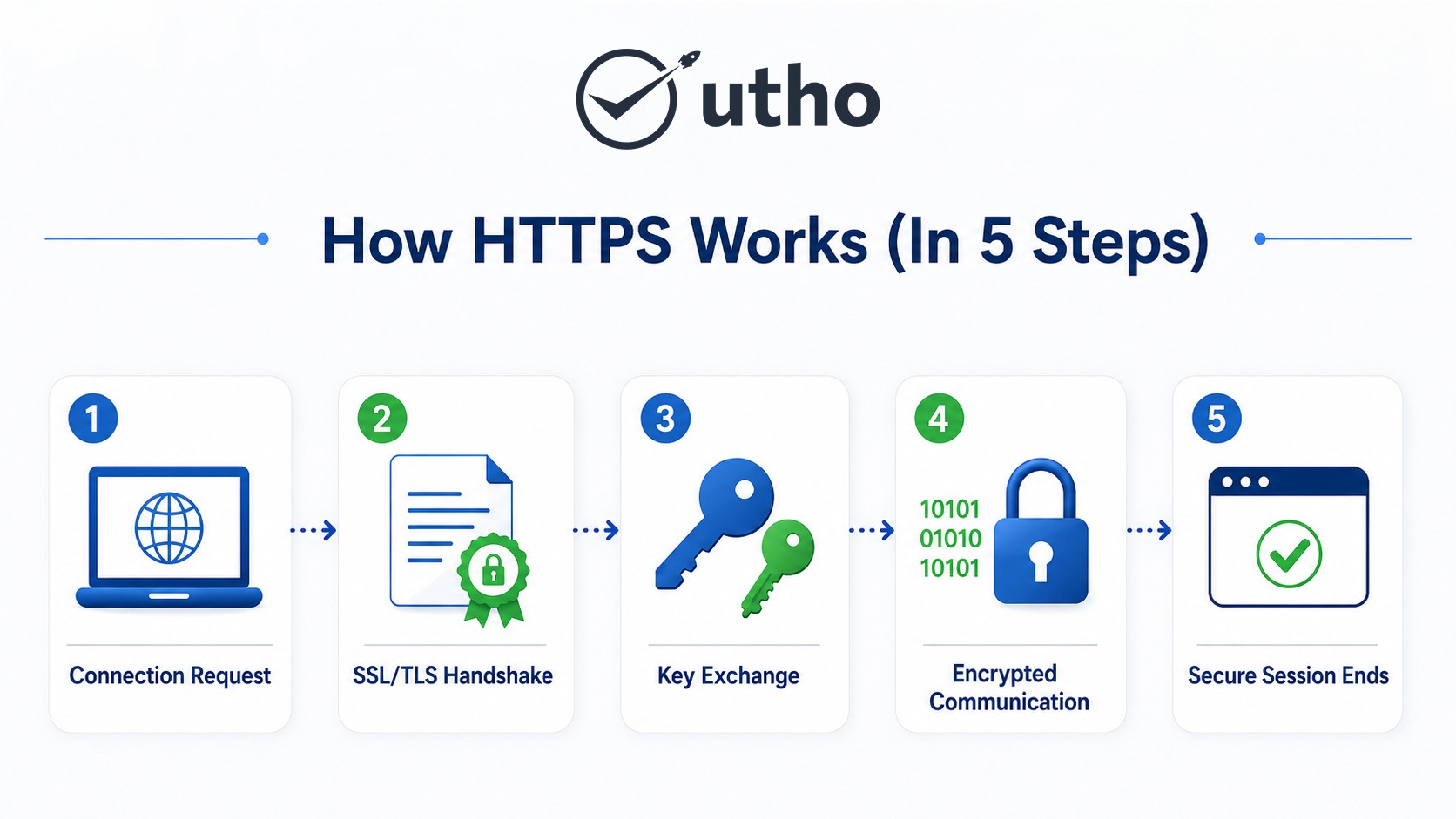
HTTPS works like HTTP but it adds a strong security layer using SSL and TLS encryption protocols that protect all communication between browser and website.
This makes sure data shared between browser and website stays private safe and cannot be changed or read by anyone else.
Instead of sending data directly like HTTP HTTPS first creates a secure connection before any data transfer starts.
1. Connection Request
When you open a secure website such as:
Your browser does not directly start sending data It first sends a request to create a secure connection with the server
At this stage the system checks if a safe communication channel can be made
This is the first step where browser and server start building trust
2. SSL TLS Handshake
After this the server sends a digital certificate called SSL TLS certificate
This certificate works like a digital ID card of the website and includes
Website domain name
- Public encryption key
- Certificate authority information
- Expiry date of certificate
After receiving it the browser does not trust it directly It first checks it using trusted sources like
- Certificate authorities
- Browser built in trust system
If the certificate is valid the connection continues If not the browser shows a warning
This step makes sure the user is connecting to a real and safe website
3. Key Exchange
After verification both browser and server create a session key
This key is very important because it is used to lock and unlock all data during the session
HTTPS uses two types of encryption
- Asymmetric encryption for secure key exchange
- Symmetric encryption for fast data transfer
This mix gives both strong security and good speed
After this both sides share the session key safely without anyone else seeing it
4. Encrypted Communication
Now the secure connection is fully established, and all communication becomes encrypted.
From this point onward:
- Browser requests are encrypted
- Server responses are encrypted
- Form submissions are protected
- Login credentials remain secure
- Payment and personal data are fully protected
Even if a hacker tries to intercept this data during transmission, they will only see random, unreadable characters instead of actual information.
This is the core strength of HTTPS—it turns sensitive data into secure encrypted code during transit.
5. Secure Session Ends
Once the browsing session is completed, the security connection is properly closed.
At this stage:
- The session key is destroyed
- Encrypted connection is terminated
- A new session key is generated the next time you visit
This ensures that even if one session were somehow compromised, it cannot be reused in the future. It significantly improves overall security and reduces long-term risks.
Why HTTPS is More Important
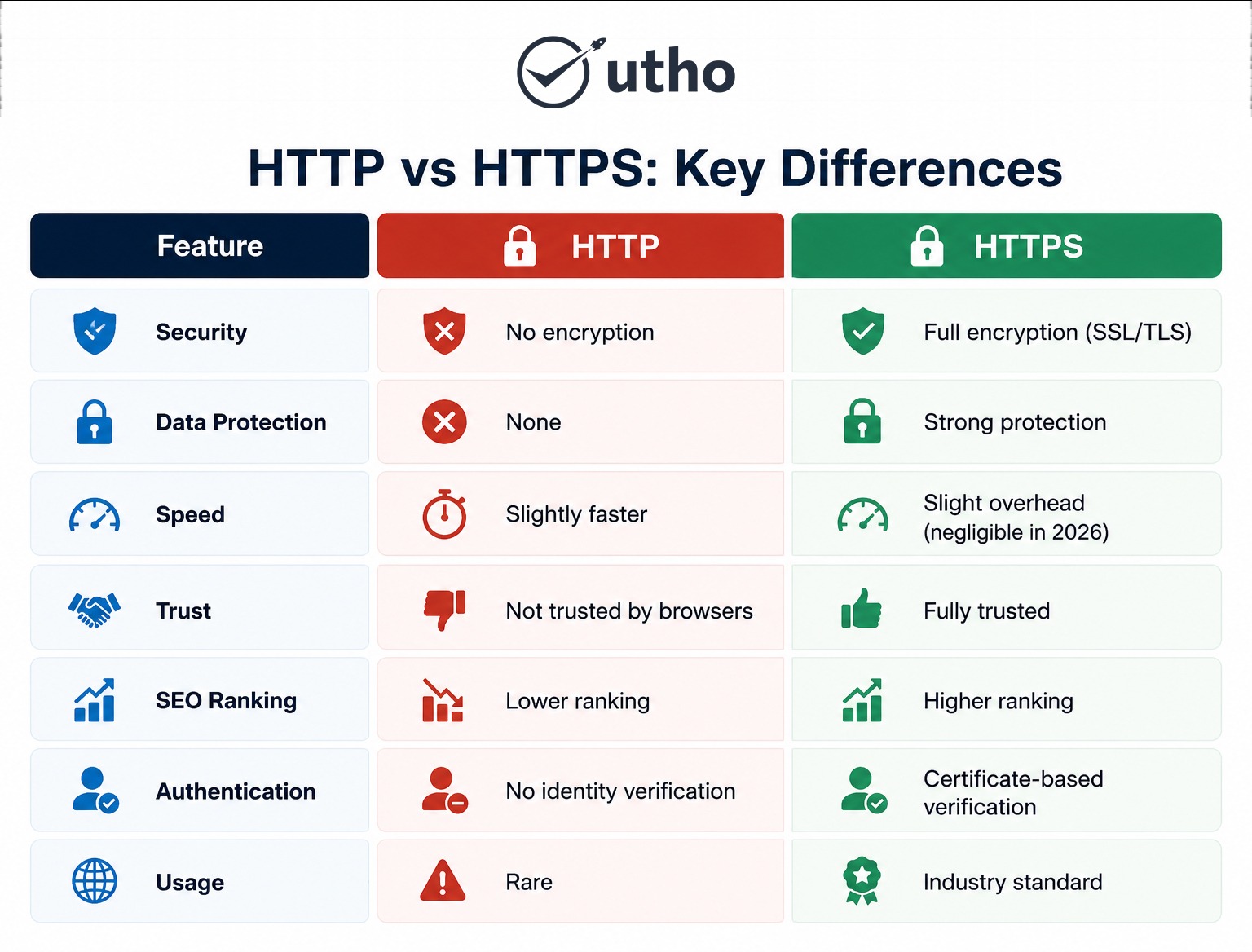
In 2026 HTTPS is not optional or just a good practice anymore it has become a basic requirement for almost every website and online service.
The internet has changed a lot and security threats have also become more advanced. Websites today are not just simple pages; they handle banking, shopping, personal messages, AI systems and sensitive business data, so secure communication is now very important.
Here are the main reasons why HTTPS is more important than ever:
1. Cybersecurity Threats Have Increased
Modern cyber attacks are now smarter and more automatic and many of them are powered by AI tools.
Hackers do not only use manual methods anymore They use advanced systems that can scan, find and attack weak websites on a large scale.
Common modern threats include:
- AI-powered phishing websites that mimic real platforms
- Man-in-the-middle attacks where data is intercepted during transfer
- Automated tools for stealing usernames and passwords
- Data interception systems targeting unsecured connections
HTTPS helps protect against most of these attacks by encrypting communication and making intercepted data useless to attackers.
2. Browser Enforcement
Modern browsers have become strict about website security. They actively guide users away from unsafe connections.
Today browsers:
- Mark HTTP websites as “Not Secure”
- Show warnings before entering sensitive information
- Block or restrict form submissions on insecure pages
- Limit certain functionalities on HTTP sites
In many cases, users avoid HTTP websites completely due to these warnings, which directly affects trust and traffic.
3. Google Ranking Factor
HTTPS is also an important factor in search engine optimization (SEO).
Search engines like Google prefer secure websites because they provide a safer user experience.
As a result, HTTPS websites:
- Rank higher in search results
- Receive more organic traffic
- Build stronger trust signals with users
- Have better overall visibility online
This makes HTTPS important not just for security, but also for business growth and digital presence.
4. Required for Modern Web Features
Many advanced web technologies in 2026 only work on HTTPS websites.
These include:
- Progressive Web Apps (PWA)
- Geolocation APIs
- Payment gateways and online transactions
- Camera and microphone access
- AI-based web applications and services
Browsers restrict these features on HTTP websites to protect user privacy and security. This makes HTTPS mandatory for modern web development.
How HTTPS Improves Security
HTTPS provides three core layers of protection that work together to secure communication:
1. Encryption
HTTPS converts readable data into an encrypted format.
This means:
- Data cannot be read during transmission
- Even if intercepted, it appears as random characters
- Sensitive information remains fully protected
2. Authentication
HTTPS ensures that the user is communicating with the real and intended website.
This helps prevent:
- Fake websites pretending to be legitimate platforms
- Domain spoofing attacks
- Unauthorized access attempts
It builds trust between the user and the website.
3. Data Integrity
HTTPS ensures that data is not changed or tampered with during transfer.
If someone tries to modify the data:
- The browser immediately detects it
- The connection is blocked or rejected
- The user is protected from corrupted or malicious data
This guarantees that the information received is exactly what was sent.
Role of SSL/TLS in HTTPS
SSL/TLS is the core technology behind HTTPS security. It is responsible for creating and maintaining secure communication channels.
SSL/TLS ensures:
- Secure key exchange between browser and server
- Strong encryption of all data
- Proper identity verification of websites
TLS 1.3 is widely used because it is:
- Faster in establishing secure connections
- More secure against modern cyber attacks
- Simpler and more efficient than older versions
This makes HTTPS both highly secure and performance-friendly in modern web systems.
HTTP vs HTTPS in Real-Life Example
To understand the difference more clearly, let’s compare both in a real-world scenario:
HTTP Example
If you log in to a website using HTTP:
- Username is visible in plain text
- Password is visible during transmission
- Data can be easily intercepted and stolen
This makes it unsafe for any sensitive activity.
HTTPS Example
If you log in to a website using HTTPS:
- Username is encrypted
- Password is encrypted
- All transmitted data becomes unreadable to attackers
Even if someone tries to capture the data, they will only see encrypted information that has no meaning.
Advantages of HTTPS
HTTPS has become the foundation of a secure internet. It is not just a technical upgrade, but a complete security standard that protects users, websites, and online businesses.
1. Strong Security
HTTPS protects all sensitive data by encrypting the communication between the browser and the server. This includes:
- Login credentials
- Personal information
- Banking details
- Payment data
Even if data is intercepted, it cannot be read or misused because it is fully encrypted.
2. Better SEO Ranking
Search engines prioritize secure websites. HTTPS is a confirmed ranking signal, which means:
- Secure websites get better visibility
- They appear higher in search results
- They attract more organic traffic
- They build stronger credibility online
This makes HTTPS important not only for security but also for digital growth and marketing.
3. User Trust
Modern users are more aware of online safety than ever before. Websites using HTTPS show a padlock icon in the browser, which instantly increases trust.
Users are more likely to:
- Enter personal details
- Complete payments
- Stay longer on secure websites
In contrast, insecure websites often lose users immediately due to browser warnings.
4. Required for Modern Internet
HTTPS is now essential for almost all modern web features. Without it:
- Payment systems stop working
- APIs fail to function properly
- Browsers block advanced features
- Web applications cannot access hardware or sensitive permissions
This makes HTTPS a basic requirement for building modern applications.
Disadvantages of HTTP (Why It is Obsolete)
HTTP was widely used in the early days of the internet, it is considered outdated for public websites due to serious limitations.
1. No Security
HTTP does not encrypt data. Everything is sent in plain text, which means:
- Data can be easily read during transmission
- Sensitive information is exposed
- Attackers can intercept communication
2. No Authentication
HTTP does not verify website identity. This allows attackers to:
- Create fake websites
- Imitate real platforms
- Trick users into sharing sensitive data
This increases the risk of phishing attacks.
3. SEO Penalty
Search engines reduce the visibility of HTTP websites because they are considered unsafe. As a result:
- Lower rankings
- Less organic traffic
- Reduced user trust
4. Browser Warnings
Modern browsers actively warn users when they visit HTTP sites. These warnings often show:
- “Not Secure” label
- Security alerts before form submission
- Blocked features for sensitive actions
This directly reduces user confidence and engagement.
Is HTTP Still Used?
Yes, but only in limited and controlled environments.
HTTP is still used for:
- Local development environments
- Internal company networks
- Testing and debugging systems
However, for public-facing websites and applications, HTTP has almost completely been replaced by HTTPS.
HTTPS Performance
In earlier years, HTTPS was considered slightly slower due to encryption overhead. However, this is no longer true.
Modern improvements include:
- TLS 1.3 optimization, which reduces handshake time
- Hardware acceleration, making encryption faster
- Edge computing networks, which reduce latency
In real-world usage today, HTTPS performs just as fast as HTTP, and in many cases even better due to optimized infrastructure.
Cost of HTTPS Today
Earlier, SSL certificates were expensive and difficult to manage, but this has completely changed.
Now:
- Free SSL certificates are available through providers like Let’s Encrypt
- Cloud platforms automatically enable HTTPS by default
- CDN services include SSL protection as standard
So HTTPS is now:
✔ Free
✔ Easy to implement
✔ Automatically managed in most systems
This has made secure communication accessible to everyone—from small websites to large enterprises.
Future of Web Security
The future of the internet is moving toward a fully secure and fully encrypted digital system.
As cyber threats become more advanced and AI based attacks increase web security standards are also changing very fast.
In the coming years security will not be optional it will become a basic requirement built into every online system.
1. HTTPS Everywhere
One of the biggest shifts happening is the complete adoption of HTTPS across the internet.
In the future:
- HTTP will disappear from public websites
- Every website will automatically use HTTPS
- Browsers will fully enforce secure connections
- Insecure websites may not load at all
This means the entire web will operate on secure communication by default, without users needing to think about it.
2. Encrypted-by-Default Internet
The internet is moving toward a model where all data is encrypted automatically.
This includes:
- Web browsing
- App communication
- API requests
- Cloud data transfer
In this system, encryption will not be an option—it will be a built-in standard. Every piece of data traveling across the internet will be protected by default, ensuring maximum privacy and security for users.
3. Quantum-Safe Encryption (Upcoming)
With the rise of quantum computing, traditional encryption methods may become vulnerable in the future. To solve this challenge, new technologies are being developed.
Future systems will use:
- Post-quantum cryptography
- Advanced encryption algorithms
- Quantum-resistant security models
These methods are designed to protect data even against extremely powerful computing systems, ensuring long-term security of digital information.
4. AI Security Monitoring
Artificial intelligence will play a major role in future web security systems.
AI-powered monitoring systems will be able to:
- Detect fake or cloned websites instantly
- Identify phishing attacks in real time
- Monitor unusual user behavior
- Detect data leaks before they spread
Instead of reacting after a cyber attack, future systems will be proactive—preventing threats before they cause damage.
Conclusion
The difference between HTTP and HTTPS is simple but extremely important:
- HTTP = Unsecured communication
- HTTPS = Secure, encrypted communication
HTTPS is no longer optional—it has become the standard foundation of the internet.
It ensures:
- Security
- Privacy
- Trust
- SEO benefits
- Modern web compatibility
Today, any website that handles users, data, or transactions must use HTTPS. Without it, a website is not considered safe, reliable, or future-ready.If you are running any website today, understanding http vs https is essential for making secure decisions. Many developers still ignore http vs https, but modern cybersecurity standards fully depend on http vs https for safe communication across the internet.